Shelling the Southeast Coast of Florida: An Unforgettable Beachcomber’s Dream Day
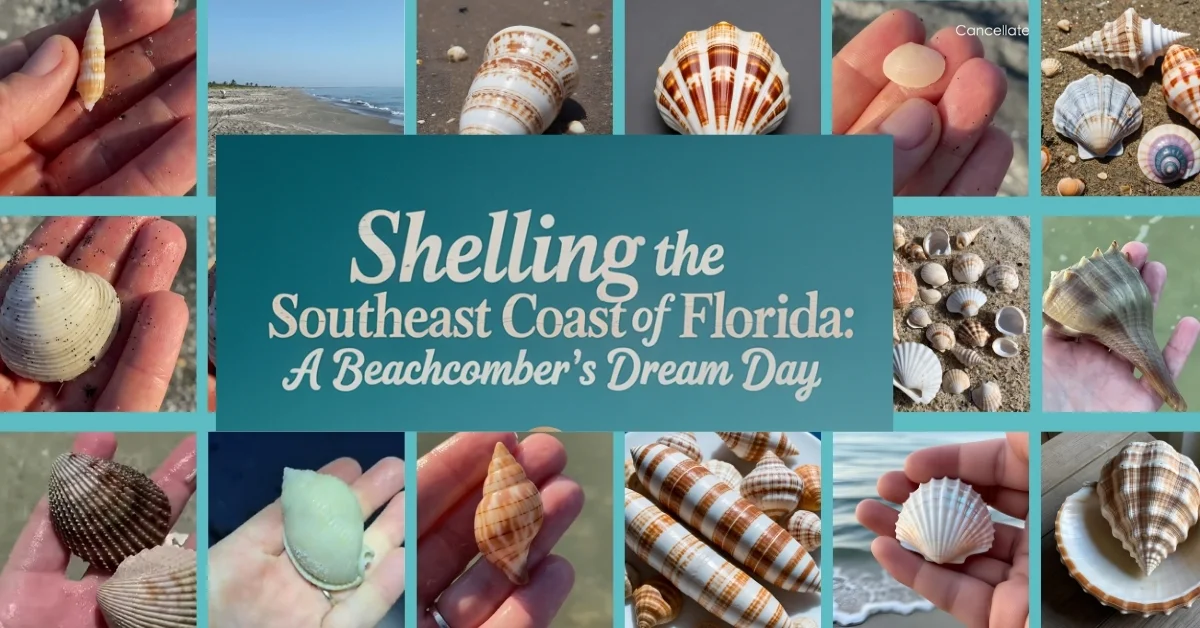
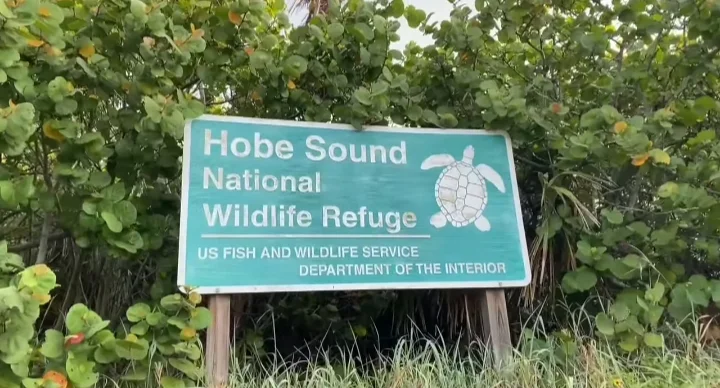
Today, I’m taking you with me on an unforgettable seashell hunt along the southeast coast of Florida after Kice island shelling adventure —specifically, Hobe Sound National Wildlife Refuge. This incredible day was filled with treasures like shells of Florida, sea beans, and unexpected surprises, all wrapped up in the best kind of saltwater adventure.
And as if a beach day wasn’t enough, I was already in a fantastic mood—because that evening, I was going to see Jay Shetty on tour! Starting my morning with some shell collecting was the perfect kickoff to what turned out to be a truly magical day.
Back to Hobe Sound
I had been to Hobe Sound about six weeks ago and remembered it being lovely. So when I had the chance to return, I jumped at it. After an early start and a drive across the state, I was greeted by an empty beach, some giant sea turtle nests (possibly from leatherbacks!), and that familiar thrill of anticipation.
Treasure Hunting Begins At Southeast Coast of Florida
At first, the pickings were slim—just a few broken shells and a slipper shell or two—but patience is key when beachcombing. Soon, the shells started rolling in:
Crosshatched Lucine
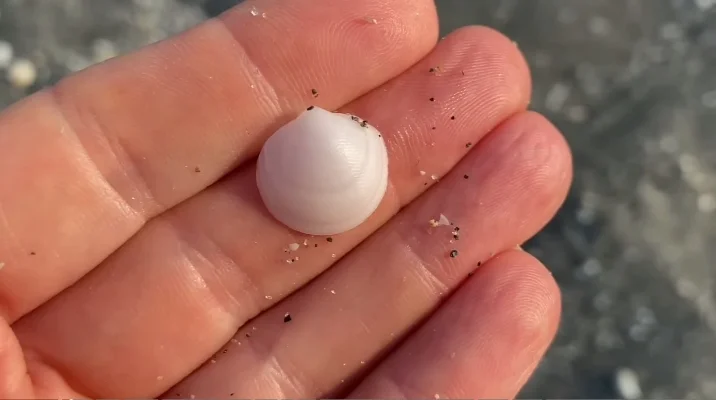
(Scientific name: Divaricella quadrisulcata)
The Crosshatched Lucine is a small white clam shell that’s always exciting to spot on the beach—mainly because it’s not very common!
What It Looks Like?
- Round or slightly oval in shape
- White or creamy in color
- The name “crosshatched” comes from its crisscross pattern—tiny ridges that look like someone carved little X-shapes across the shell
Where You Can Find It?
- Found mostly on sandy beaches in Florida and the Gulf of Mexico
- Look in shallow waters, tide pools, or shell lines after a storm
- You’ll have better luck finding it on quieter beaches where fewer people collect
Size
- Usually less than 1 inch (2.5 cm) across
- Small, but strong and symmetrical
Fun Fact:
Crosshatched Lucines belong to a family of clams that live buried in sand or mud. They often form a symbiotic relationship with bacteria in their gills to help them survive in low-oxygen environments. Cool, right? As if crosshatched lucines are not true decomposers of the ocean. But they help clean the ocean floor by hosting bacteria that break down toxic sulfides. So, they support the process of decomposition.
Calico and Rough Scallops – Colorful Finds on Southeast Coast of Florida
If you’re beachcombing along the Florida coast, chances are you’ll come across some beautiful scallop shells. Two of the most popular (and fun to collect) are the Calico Scallop and the Rough Scallop. They may be small, but their colors and patterns are stunning!
Calico Scallop
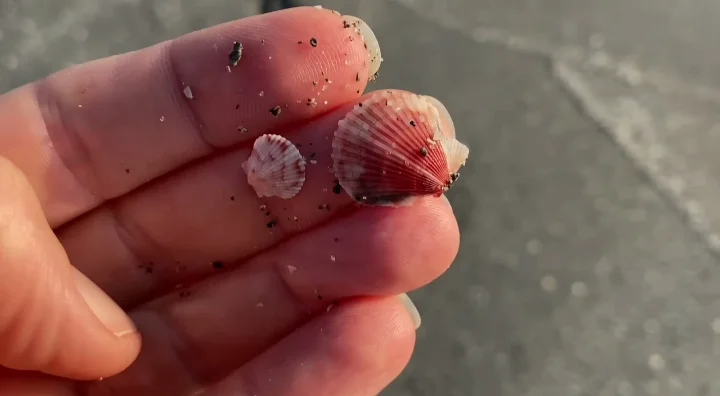
(Argopecten gibbus)
This shell is a favorite among collectors for its bright, blotchy colors—reds, purples, oranges, and pinks all mixed together like a calico cat. That’s how it got its name!
- Shape: Fan-like, flat shell with fine ridges
- Colors: Bold splashes of color over a white or cream base
- Size: About 1.5 to 2.5 inches wide
- Where to Find: Atlantic side of Florida, often in shell piles after strong tides
- Cool Fact: These scallops could swim when they were alive! They snapped their shells to move through the water.
Rough Scallop
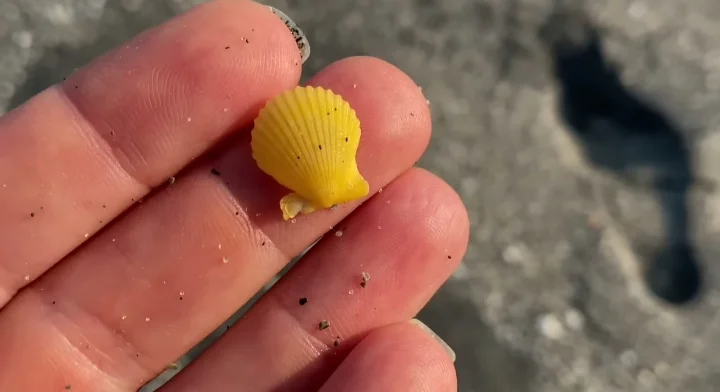
(Aequipecten muscosus)
While Rough Scallops are smaller, they’re just as exciting to find. Their ribbed surface feels rough or spiky, which helps protect them and blend in with their surroundings underwater.
- Shape: Classic fan shape, with raised ribs that feel bumpy
- Colors: Yellows, oranges, pinks, and deep reds
- Size: Usually 1 to 2 inches wide
- Where to Find: Gulf coast of Florida, near grassy flats and tide lines
- Fun Fact: Those rough ridges once helped the scallop hide in sandy or grassy seafloors.
Lady-in-Waiting Venus Clams
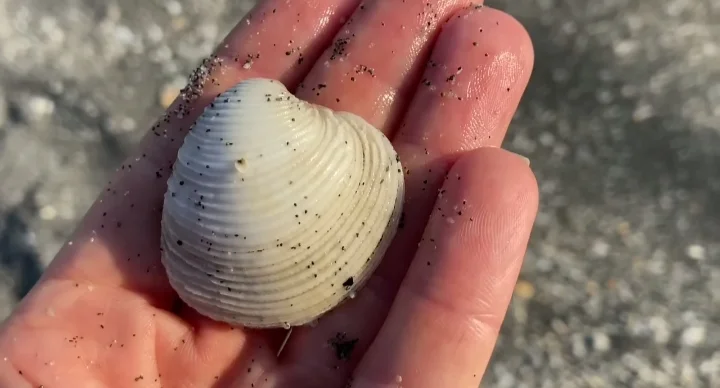
(Chione elevata)
The name might sound fancy—and this shell lives up to it! The Lady-in-Waiting Venus Clam is a charming little bivalve that’s a pleasure to spot while beachcombing. It’s not as common as other Venus clams, which makes it a fun find for shell collectors.
What It Looks Like?
- Small and rounded triangular in shape
- Creamy white to light brown base with radiating darker lines or zig-zag markings
- Often has a slightly shiny or polished look when fresh
Where You Can Find It?
- Found mostly along the southeast U.S. coast, especially Florida beaches
- Look in tidal flats, sandy areas, and shell lines after a strong tide or storm
Size
- Grows up to 1.5 inches (3.8 cm) across
- Compact, but has a strong, thick shell
Cancellate Semele, Dove Snails & Shiny Auger – Small But Special Beach Finds
Even tiny shells have big stories! These three shells—Cancellate Semele, Dove Snails, and the Shiny Auger—may be small, but they’re full of charm and often missed by beginner collectors.
Cancellate Semele
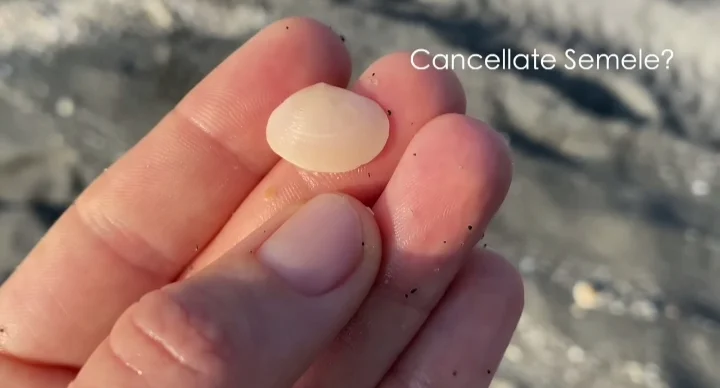
(Semele cancellata)
This tiny clam shell is a real treat for detail-lovers! Its surface has a crosshatched (cancellate) texture that looks like a mini basket weave.
- Shape: Oval, slightly rounded
- Color: Pale cream or white
- Texture: Raised crisscross ridges you can feel
- Size: Usually under 1 inch
- Where to Find: Sandy shores, often mixed into shell grit—look closely!
- Fun Fact: It belongs to the Semelidae family, known for small, delicate clams that live just under the sand.
🧺 Tip: These shells are easy to overlook—try using a small mesh scoop or sift shell piles slowly. If you are looking for cleaning seashells this guide is for you. How to Clean Seashells Like a Pro [12 Bonus Tips ]
Dove Snails On Southeast Coast of Florida
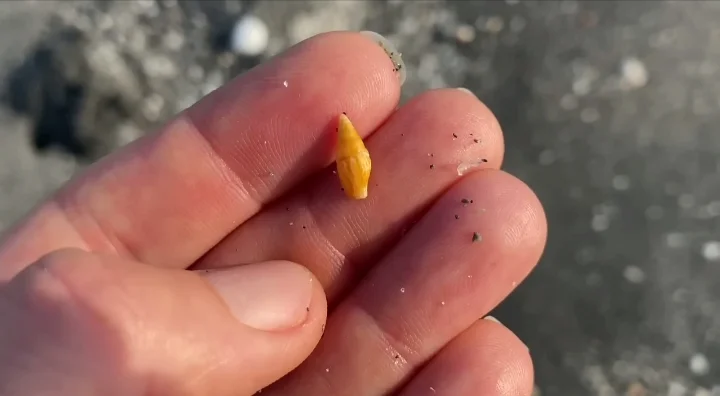
(Family: Columbellidae)
Dove Snails are tiny, glossy, and full of personality! They get their name from the Latin word for dove (Columba), and are usually found in warm shallow waters.
- Shape: Small, narrow, and glossy
- Color: Brown, tan, black, or speckled—some have zigzags or checkered designs
- Size: Less than 1 inch
- Where to Find: Along Florida’s Gulf Coast, near seagrass and shallow reefs
- Fun Fact: They’re carnivorous, feeding on algae or small invertebrates.
Tip: Because they’re so shiny, they stand out when wet—check freshly washed-up shell lines after a wave.
My First Shiny Auger
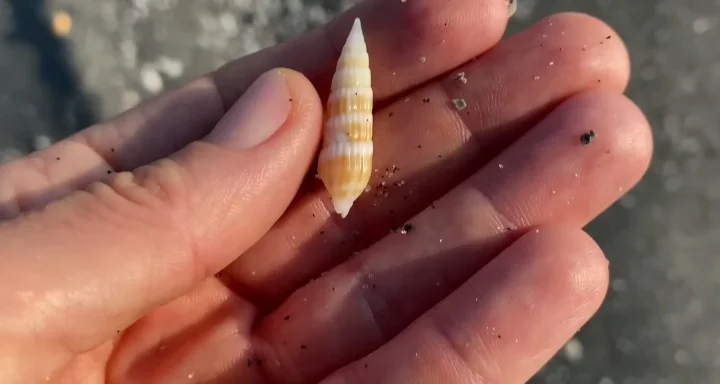
*(Family: Terebridae – likely Terebra dislocata)
Finding a Shiny Auger for the first time is a beachcomber milestone! These long, skinny shells look like tiny drills—smooth, pointed, and spiral-shaped.
- Shape: Long, spiral cone with a sharp tip
- Color: Tan, gray, or light brown, sometimes with glossy shine
- Size: 1 to 3 inches
- Where to Find: On sandy beaches, especially after storms or low tides
- Fun Fact: Augers are predators with a venomous barb—thankfully, only dangerous when alive (and usually buried in sand)
Bivalves Galore
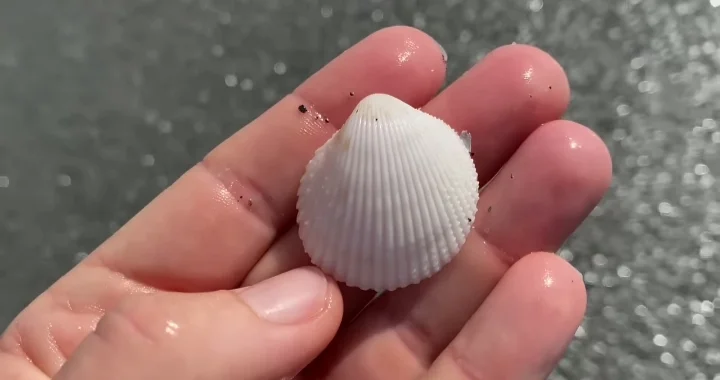
“Bivalves Galore” simply means there are a lot of bivalve shells in one place. Bivalves are a type of seashell made of two matching halves—like clams, scallops, cockles, ark shells, lucines, and venus clams. The word “bivalve” comes from Latin, where “bi” means two and “valve” means doors—so it literally means “two shells.” These creatures live buried in sand or mud, and when they die, their shells often wash up on beaches. Most of the time, the two halves break apart in the ocean, so beachcombers usually find only one side. But sometimes, after a storm or during low tide, you might find large numbers of them scattered across the shore—that’s what we call “bivalves galore!”
- Mexican Tellins with beautiful ridges
- Flats in all sizes and colors
- Imperial Venus Clams – slightly worn but still lovely
- Lightning Pitar – I hadn’t found one before my last visit, and now I can’t stop!
- Razor Clams, Strigillas, and Baby’s Ears – the broken ones are still keepers in my book
- Scaly Scallops – asymmetrical because they attach to things with bissel threads. Nature is cool.
Standout Finds
Now here’s where things got next-level exciting:
- My first East Coast Sand Dollar – a 5-hole keyhole beauty!
- A perfect lion’s paw – One of many I found that day, some vibrant orange, some weathered, all beautiful.
- Multiple Scotch Bonnets – These are incredibly rare for me, and I found several. Whole and intact, they’re now some of my favorite finds ever.
- Stubby Sollicitors – Odd little shells that look like short fat tagelus. Weird and wonderful.
- Strawberry Cockle – A shell I don’t typically find on my coast, making it extra special.
Reflecting on the Day
At one point, I met another beachcomber who told me he was finding lion’s paws. He had to leave, but I decided to stay. Best decision ever. It felt like the beach kept rewarding me the more I walked. I ended up nearly two miles from where I started, filling my shelling bag with treasures the entire way.
Final Tally & Gratitude For Southeast Coast of Florida
This day gifted me:
- Over a dozen lion’s paws
- Multiple Scotch bonnets
- Flats, lightning pitars, limpets, Mexican tellins
- Bittersweets, calico scallops, lady-in-waiting Venus clams
- And yes… a little bit of beach garbage, which I always remove
- In total, I’ve now cleaned over 76 pounds of trash from Florida’s beaches. Every bit helps.