Shrimp Tank Setup: The Complete Beginner’s Guide
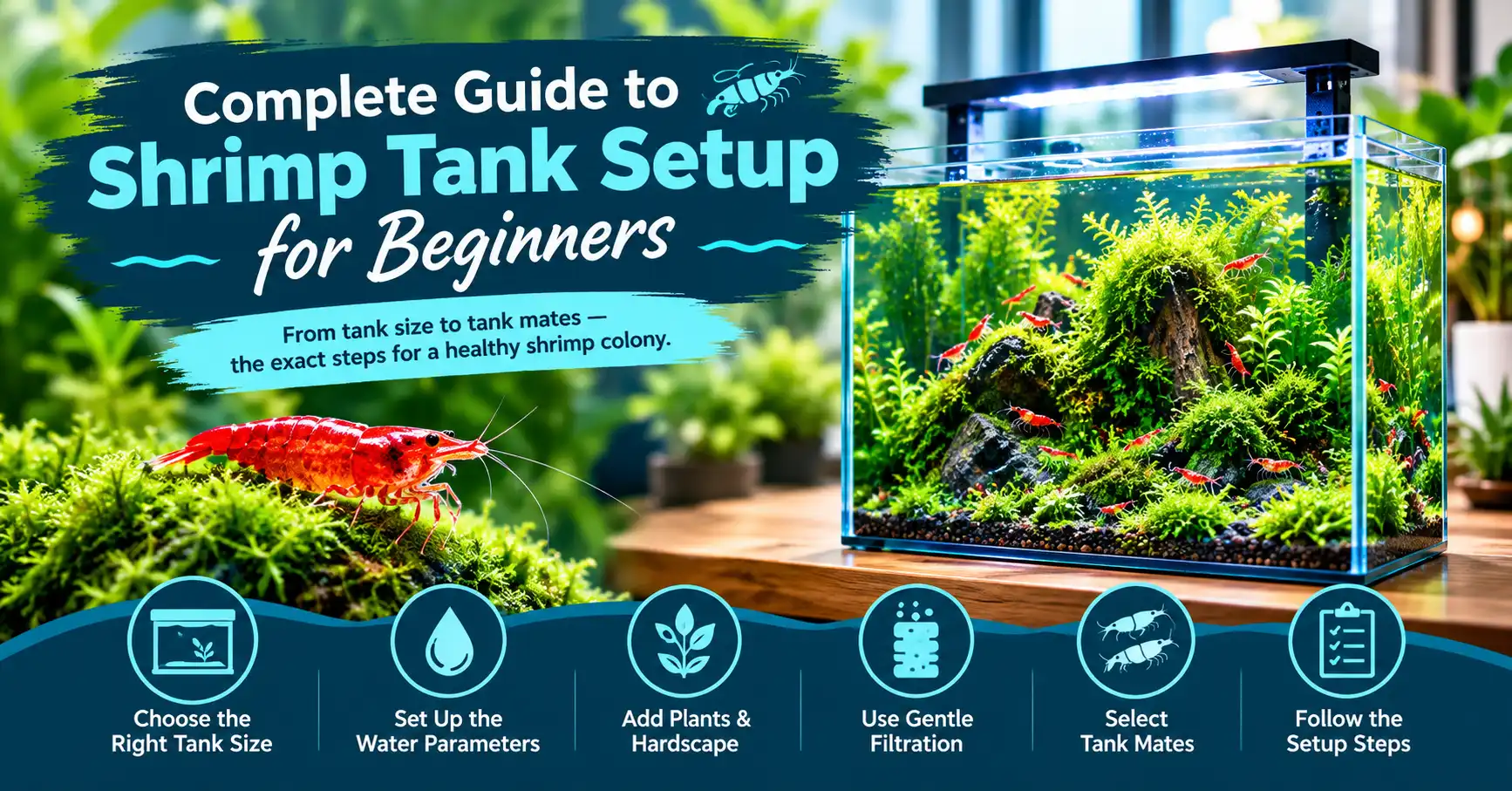
If you have ever watched a colony of cherry shrimp grazing across a piece of driftwood, you already know why so many aquarium keepers get hooked. A good shrimp tank setup does not need to be expensive or complicated, but it does need a few things done in the right order. Skip a step, and you can lose an entire colony in a weekend. Get it right, and you will have shrimp molting, breeding, and coloring up for years.
This guide walks through everything from picking a tank size to choosing tank mates, with the exact steps I use for every shrimp-only setup I build.
What Do Shrimp Need In Their Tank?
Dwarf shrimp like cherry shrimp, Neocaridina, and Caridina species are hardy compared to most fish, but they are far more sensitive to water chemistry than people expect. At minimum, a shrimp tank setup needs:
- A cycled tank. Shrimp cannot handle any detectable ammonia or nitrite.
- Stable, appropriate hardness (GH and KH). Shrimp use dissolved minerals to build new shells every time they molt.
- Gentle filtration. Strong currents exhaust shrimp and can pull shrimplets into intakes.
- Live plants, moss, or leaf litter. These grow biofilm, which is the main food source for a shrimp colony.
- Hiding spots. Shrimp feel safest with plenty of cover, especially right after molting when their new shell is soft.
- No copper. Copper-based medications and even some tap water sources are lethal to shrimp in tiny amounts.
Grab a liquid water test kit and a digital aquarium thermometer before you buy a single shrimp. You will use both constantly during setup.

Aquarium Water Master Test Kit, Fish Tank Water Testing Kit

Aquarium Thermometer Digital, Highly Accurate Fish Tank Thermometer
Choosing The Right Tank Size For Your Shrimp Setup
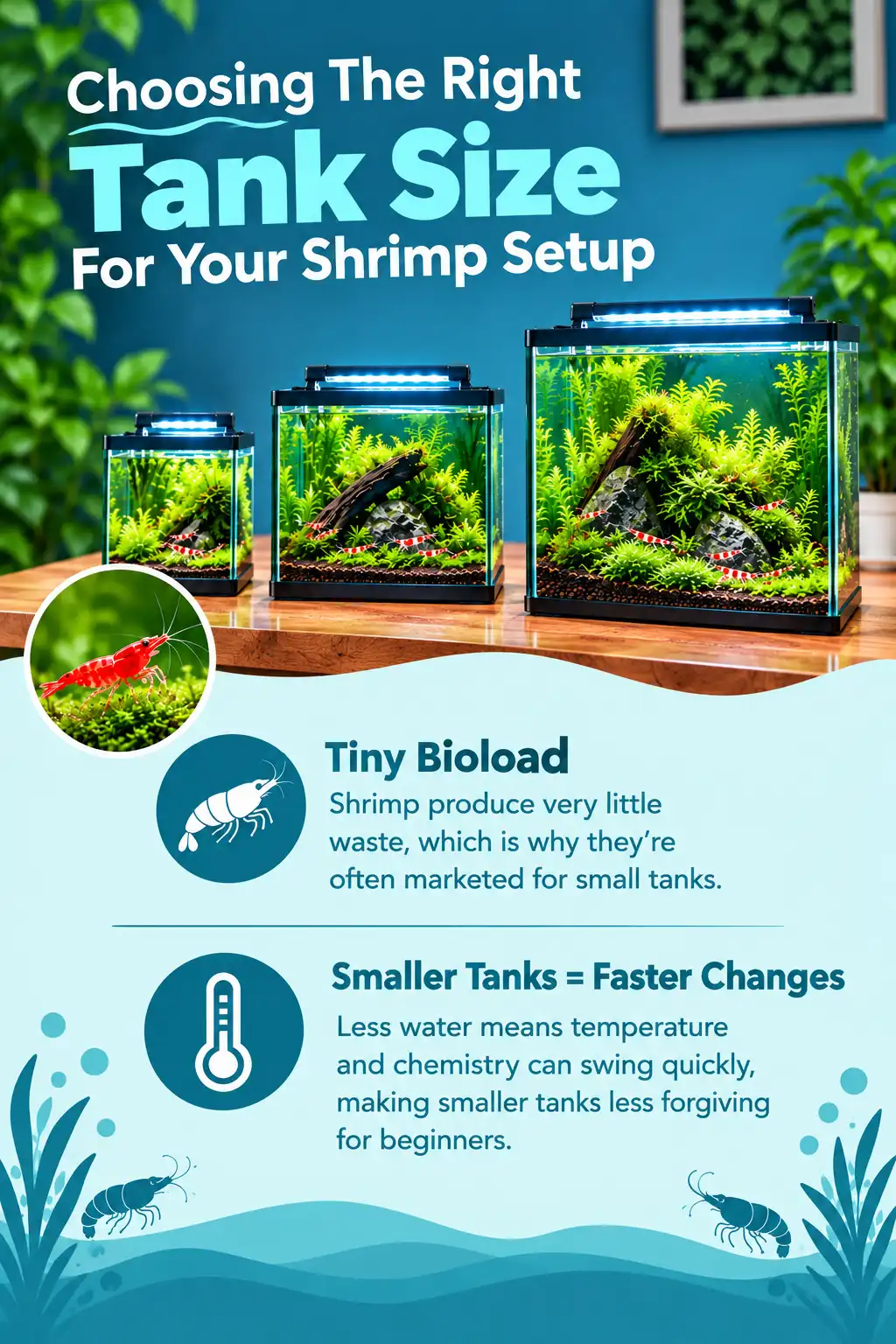
Shrimp have a tiny bioload, which is why they get marketed for small tanks. But smaller water volumes swing in temperature and chemistry much faster, which makes them less forgiving for beginners.
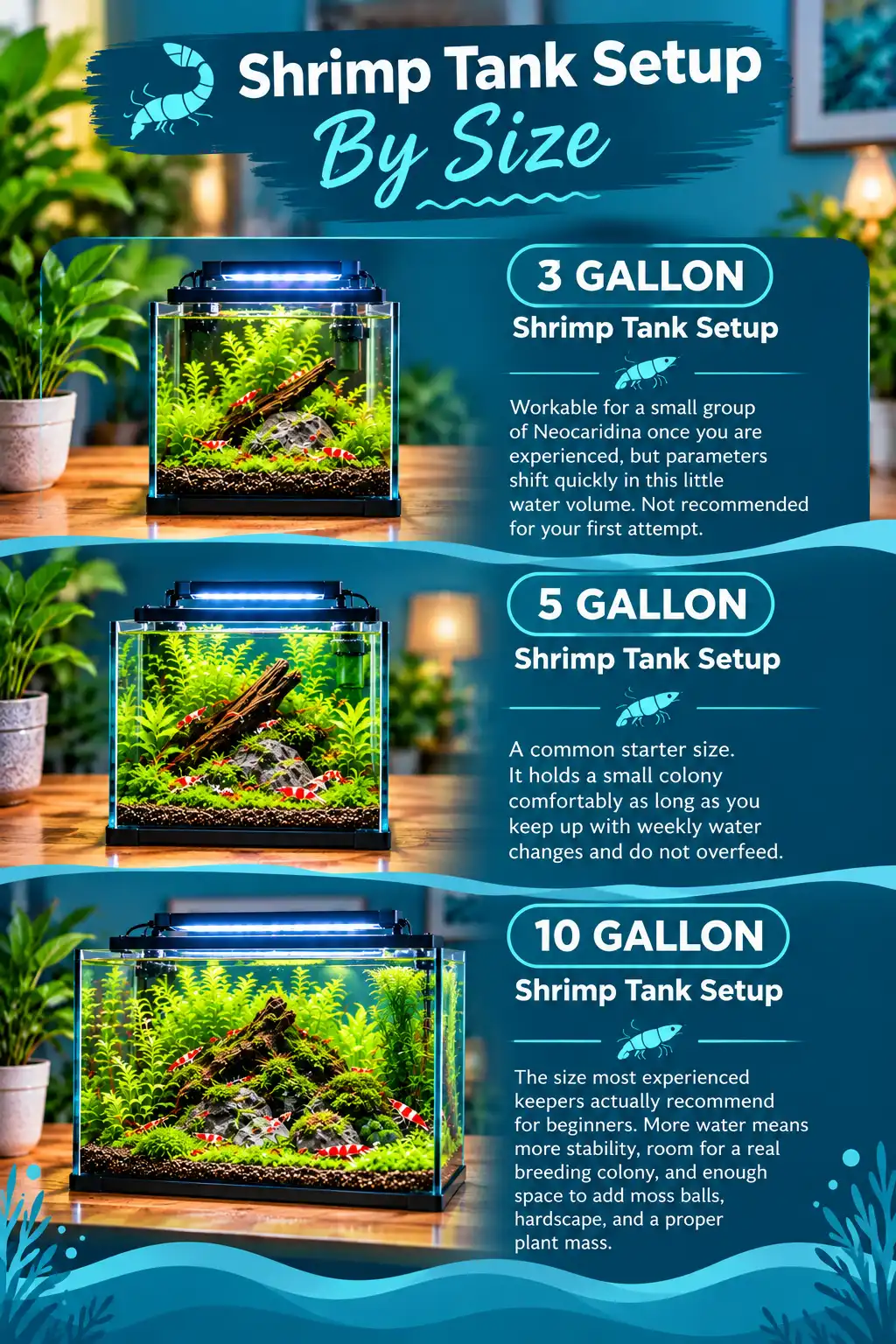
3 Gallon Shrimp Tank Setup
Workable for a small group of Neocaridina once you are experienced, but parameters shift quickly in this little water volume. Not recommended for your first attemp
5 Gallon Shrimp Tank Setup
A common starter size. It holds a small colony comfortably as long as you keep up with weekly water changes and do not overfeed.
10 Gallon Shrimp Tank Setup
The size most experienced keepers actually recommend for beginners. More water means more stability, room for a real breeding colony, and enough space to add moss balls, hardscape, and a proper plant mass.
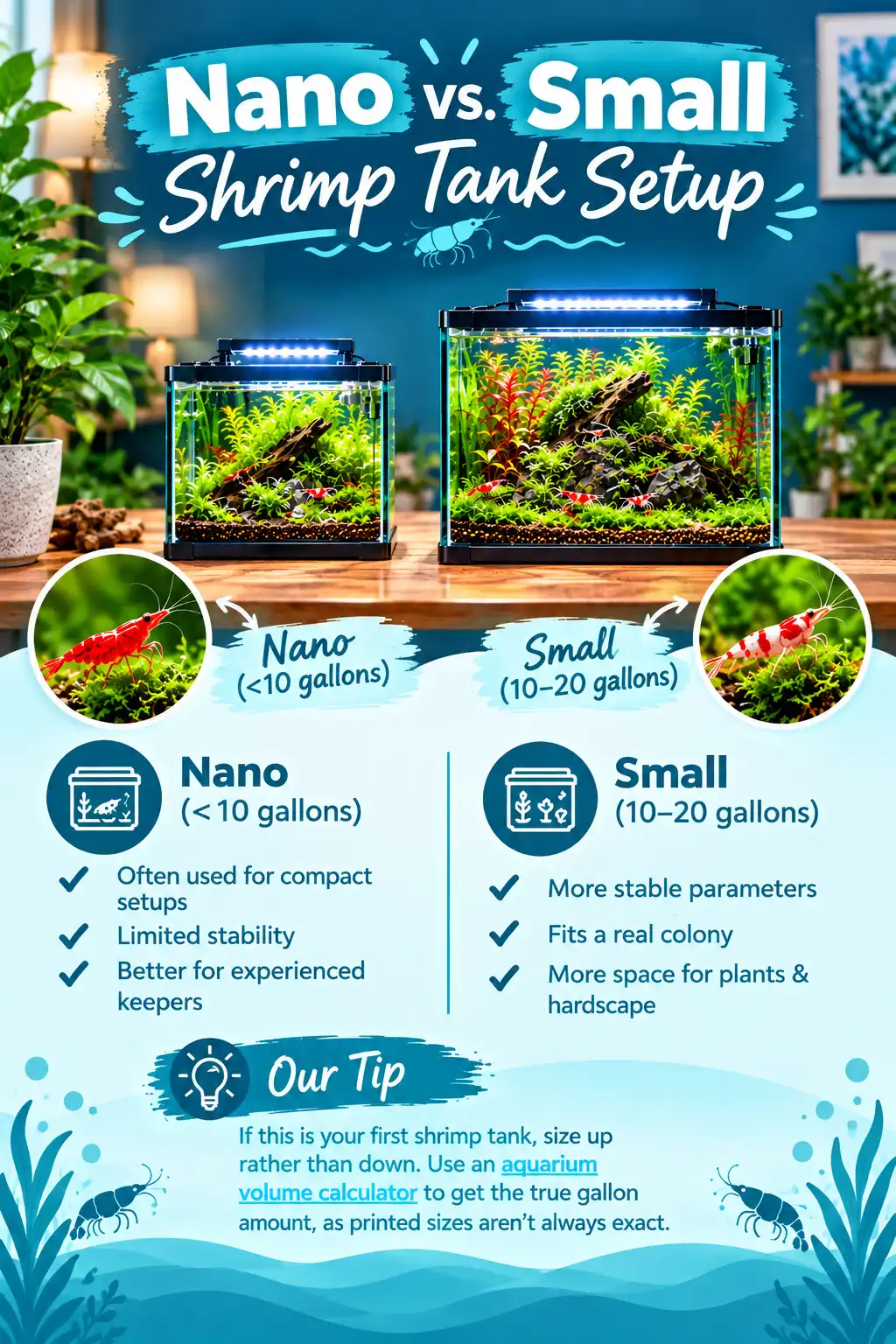
Nano Shrimp Tank Setup vs. Small Shrimp Tank Setup
“Nano” usually refers to anything under 10 gallons, while a small shrimp tank setup can stretch up to 15 or 20 gallons. If this is your first shrimp tank, size up rather than down. Use an aquarium volume calculator to confirm exactly how many gallons your tank holds once substrate, hardscape, and water line are factored in, since printed tank sizes are rarely exact.
Step-By-Step Shrimp Tank Setup For Beginners
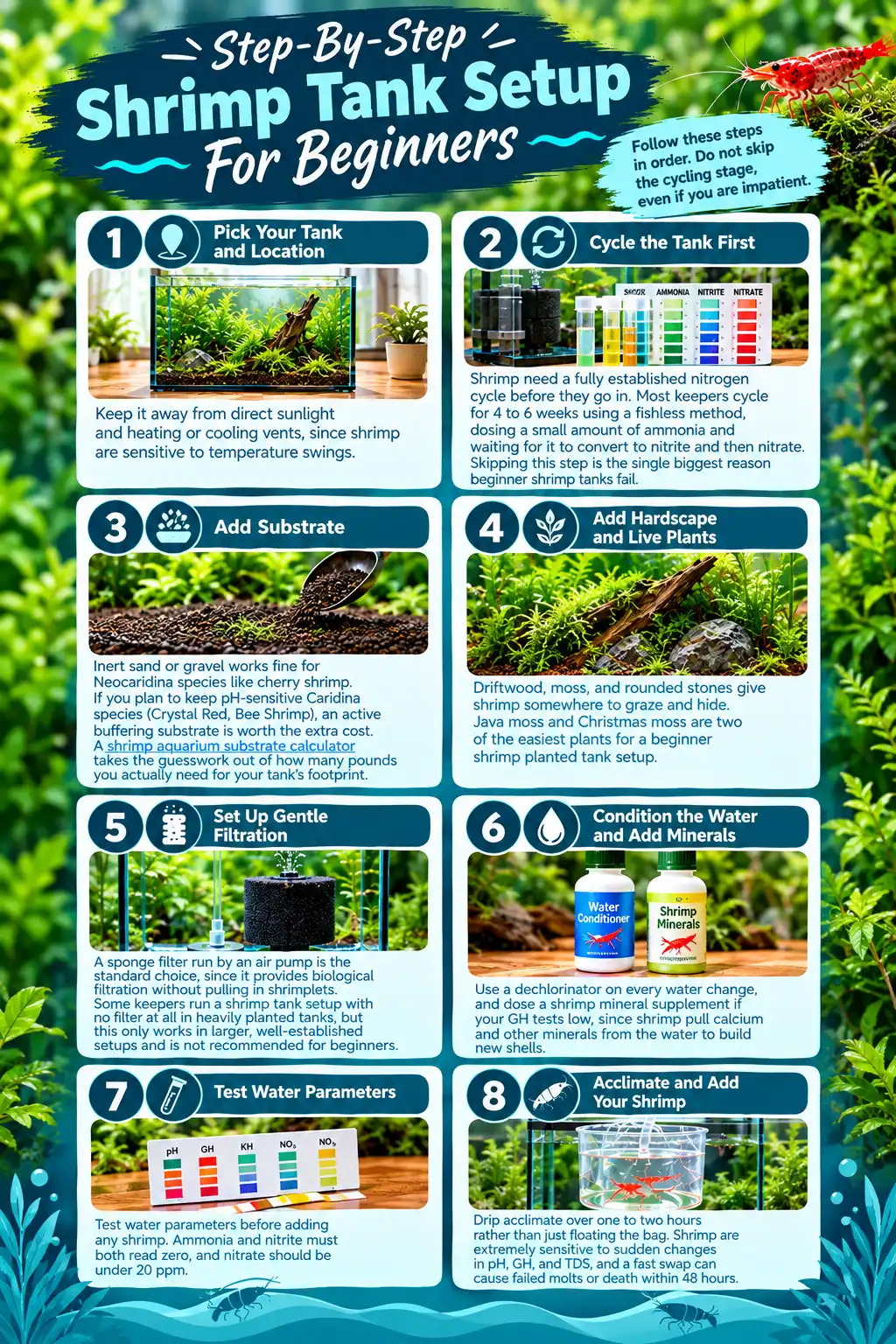
Follow these steps in order. Do not skip the cycling stage, even if you are impatient.
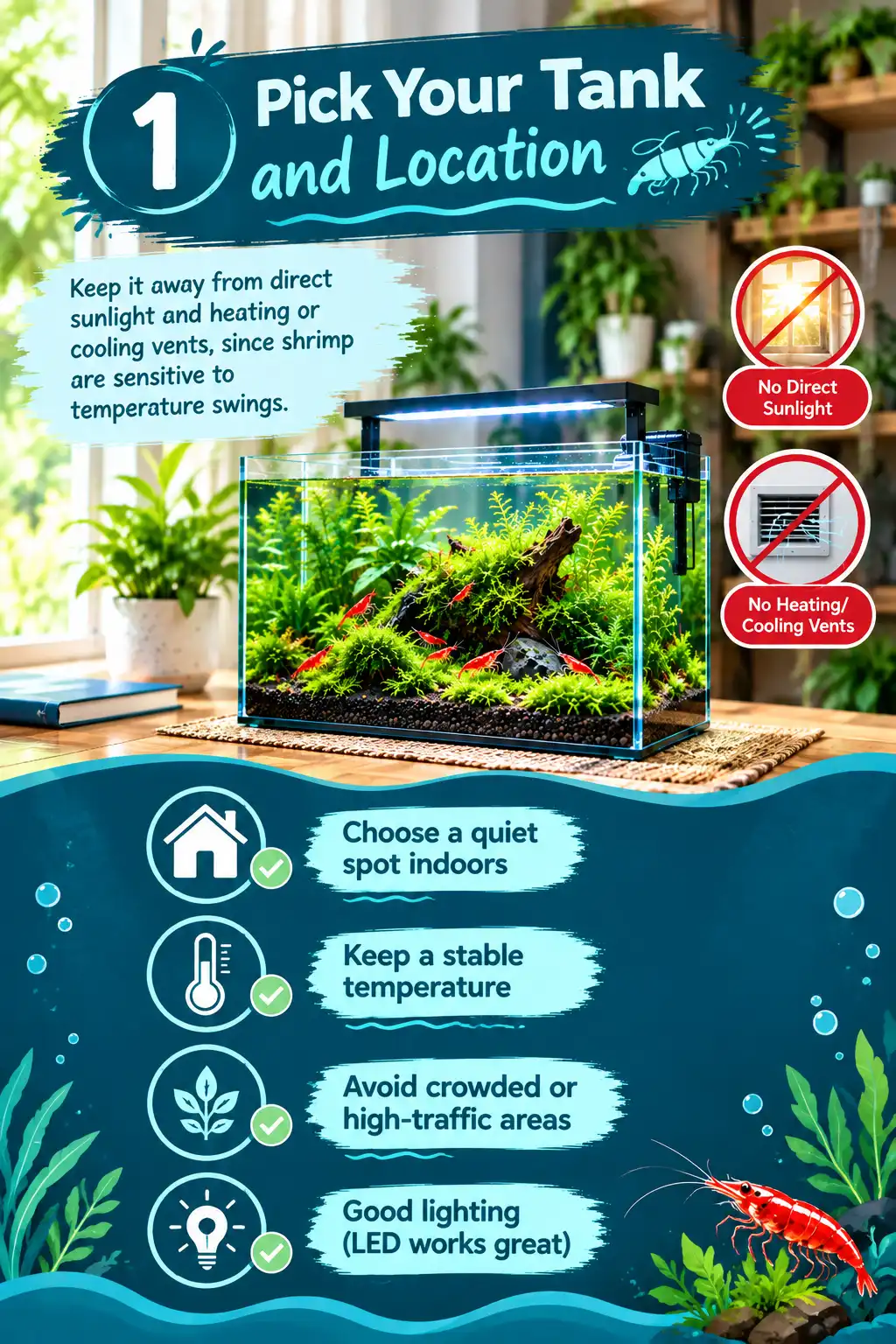
- Pick your tank and location. Keep it away from direct sunlight and heating or cooling vents, since shrimp are sensitive to temperature swings.
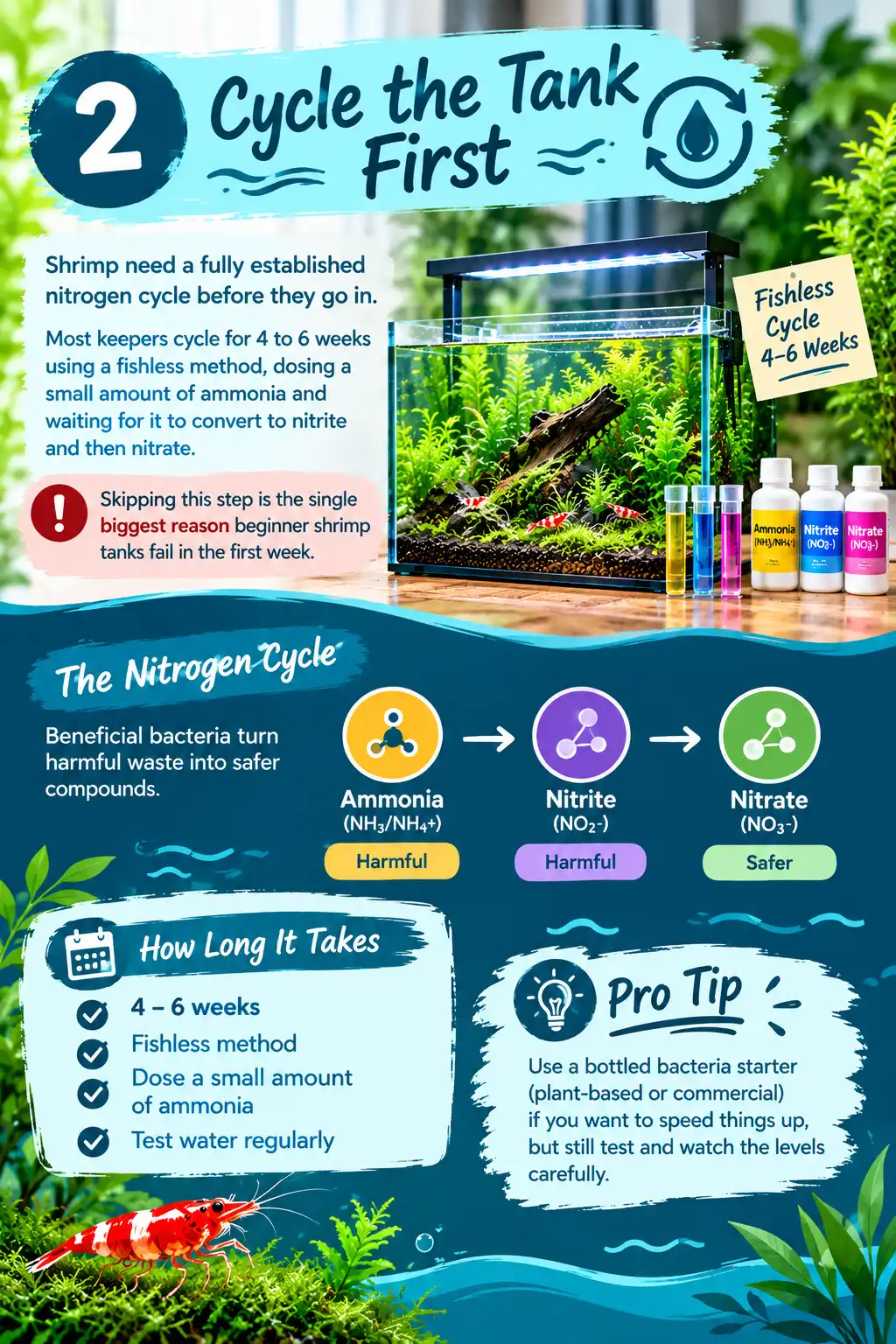
- Cycle the tank first. Shrimp need a fully established nitrogen cycle before they go in. Most keepers cycle for 4 to 6 weeks using a fishless method, dosing a small amount of ammonia and waiting for it to convert to nitrite and then nitrate. Skipping this step is the single biggest reason beginner shrimp tanks fail in the first week.
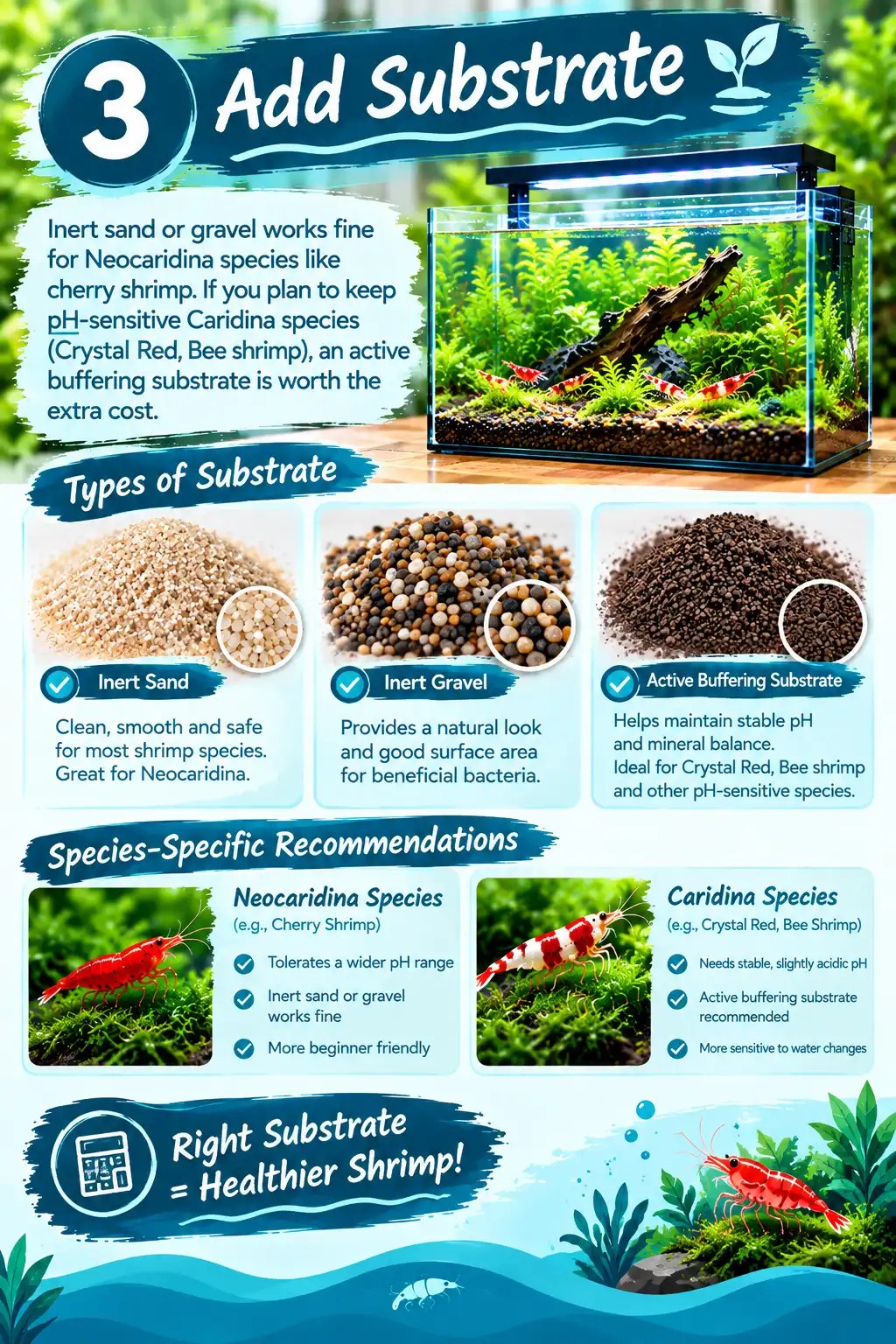
- Add substrate. Inert sand or gravel works fine for Neocaridina species like cherry shrimp. If you plan to keep pH-sensitive Caridina species (Crystal Red, Bee shrimp), an active buffering substrate is worth the extra cost. A shrimp aquarium substrate calculator takes the guesswork out of how many pounds you actually need for your tank’s footprint.
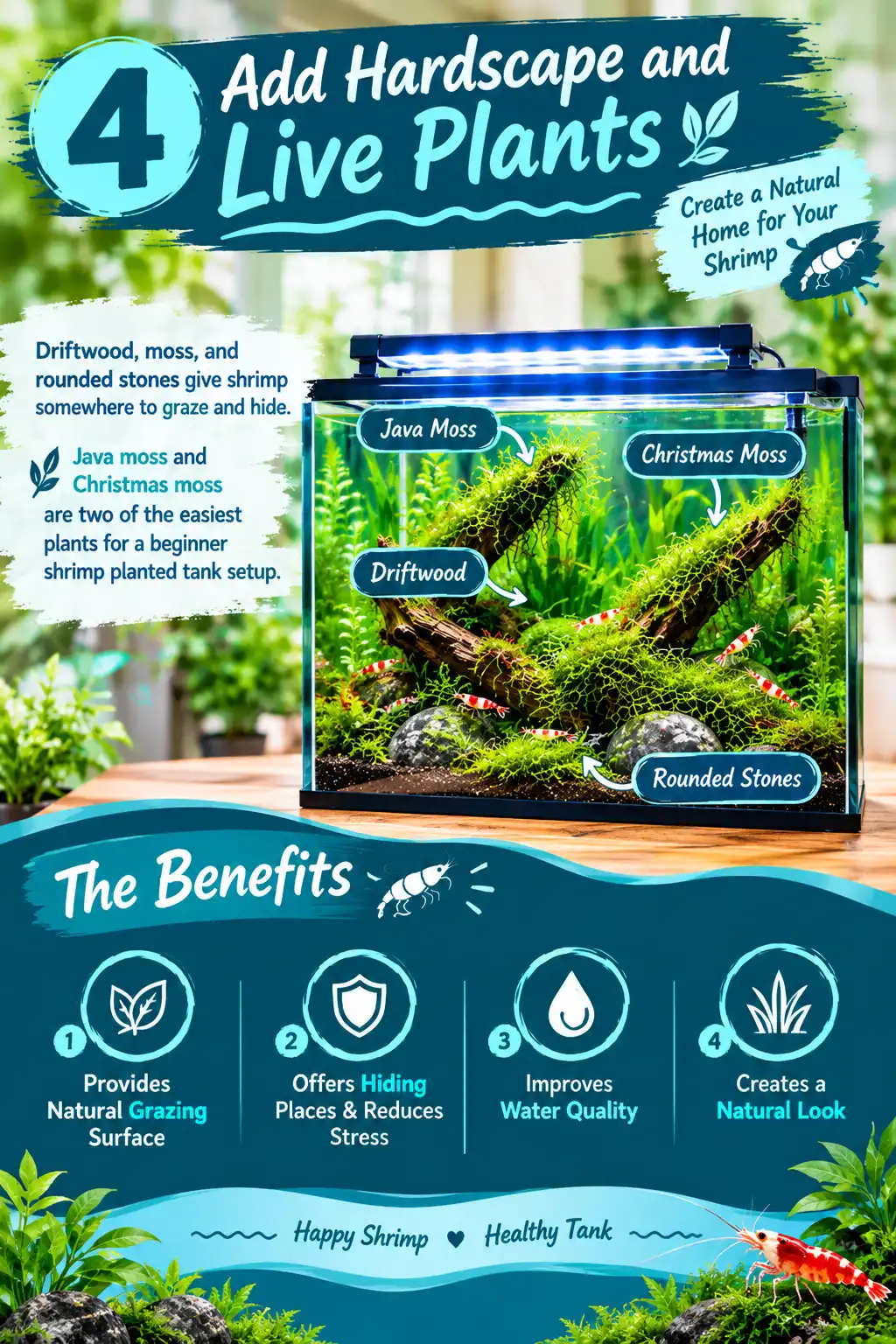
- Add hardscape and live plants. Driftwood, moss, and rounded stones give shrimp somewhere to graze and hide. Java moss and Christmas moss are two of the easiest plants for a beginner shrimp planted tank setup.
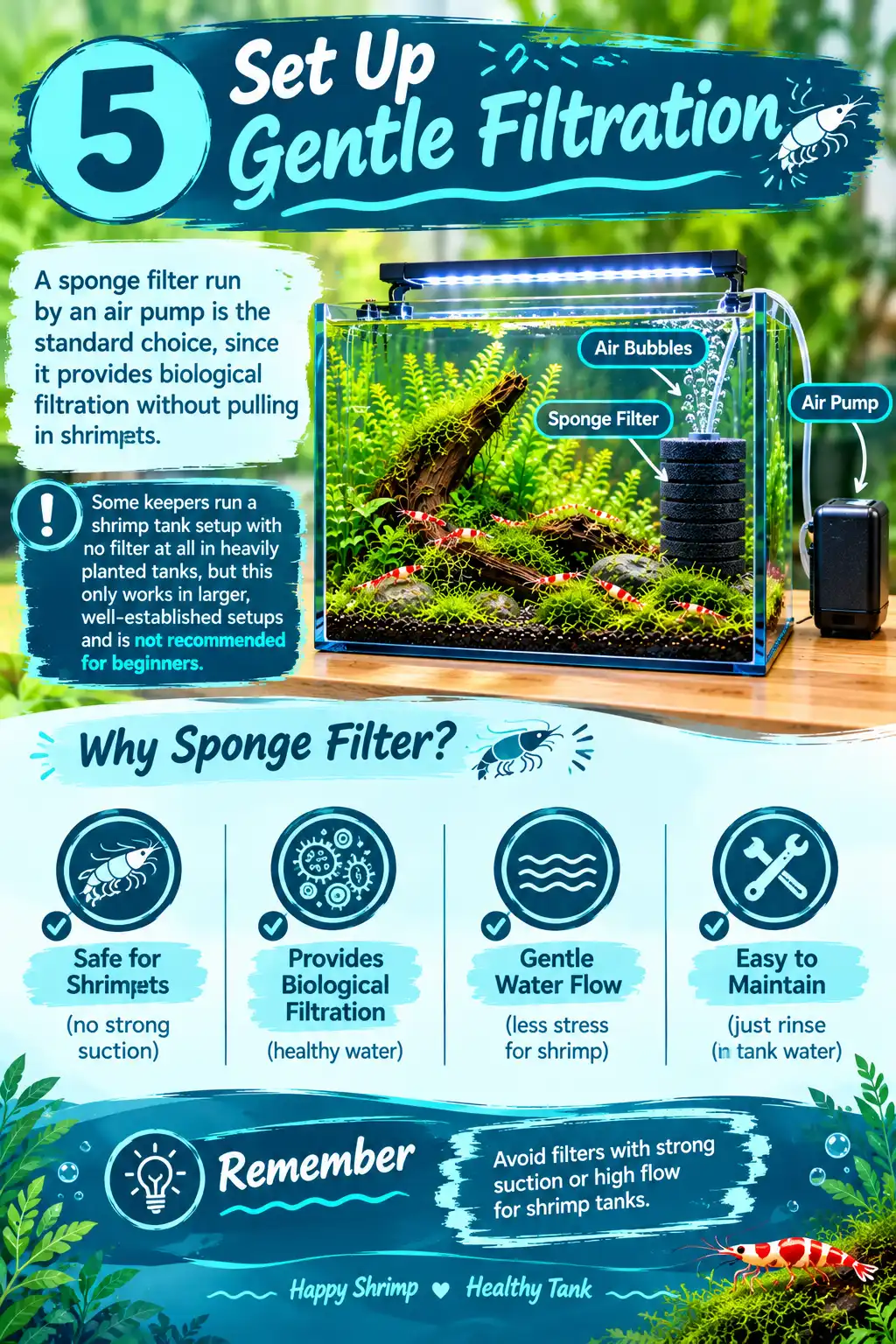
- Set up gentle filtration. A sponge filter run by an air pump is the standard choice, since it provides biological filtration without pulling in shrimplets. Some keepers run a shrimp tank setup with no filter at all in heavily planted tanks, but this only works in larger, well-established setups and is not recommended for beginners.
- Condition the water and add minerals. Use a dechlorinator on every water change, and dose a shrimp mineral supplement if your GH tests low, since shrimp pull calcium and other minerals from the water to build new shells.
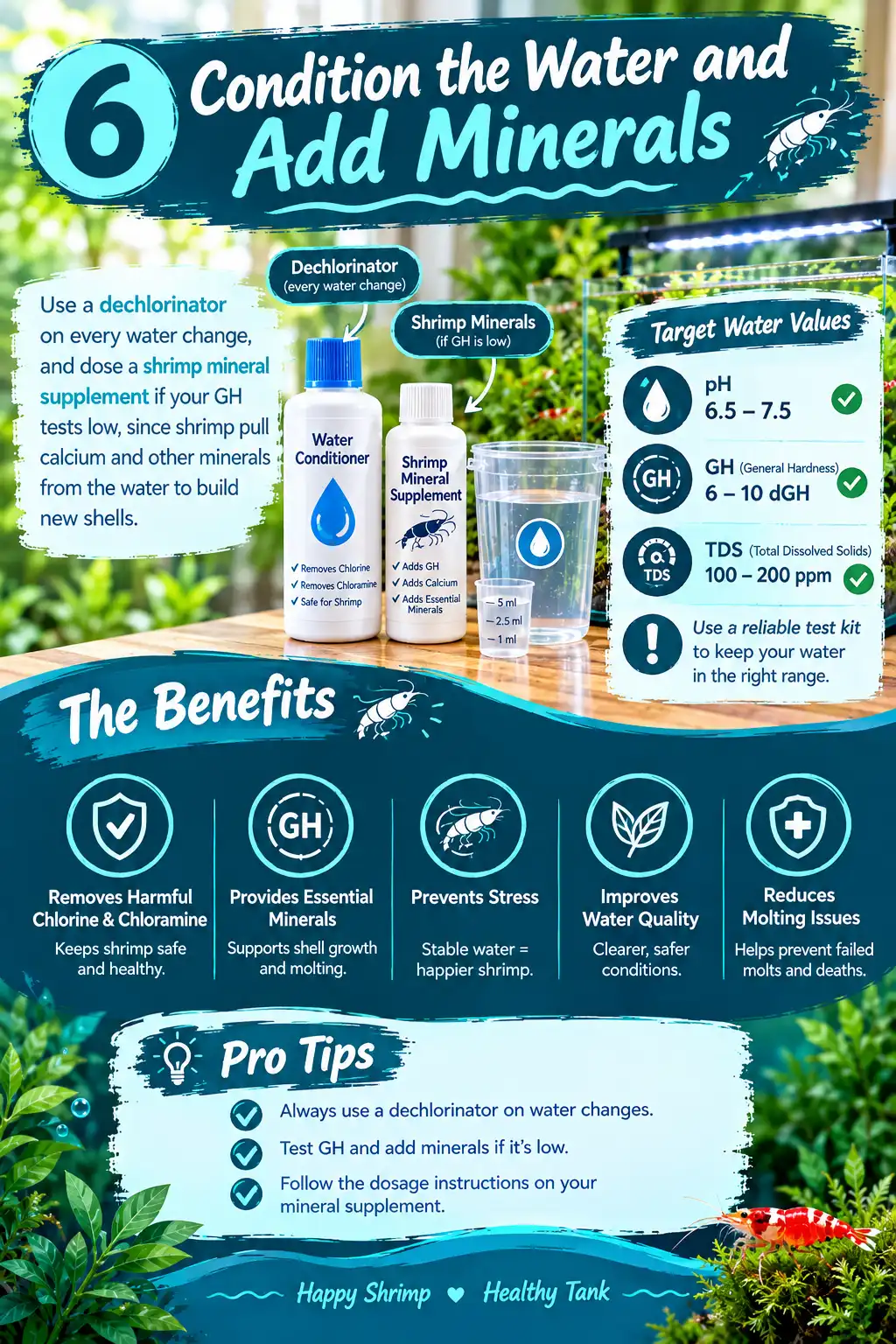

Shrimp Mineral Supplement GH/KH+ 100g
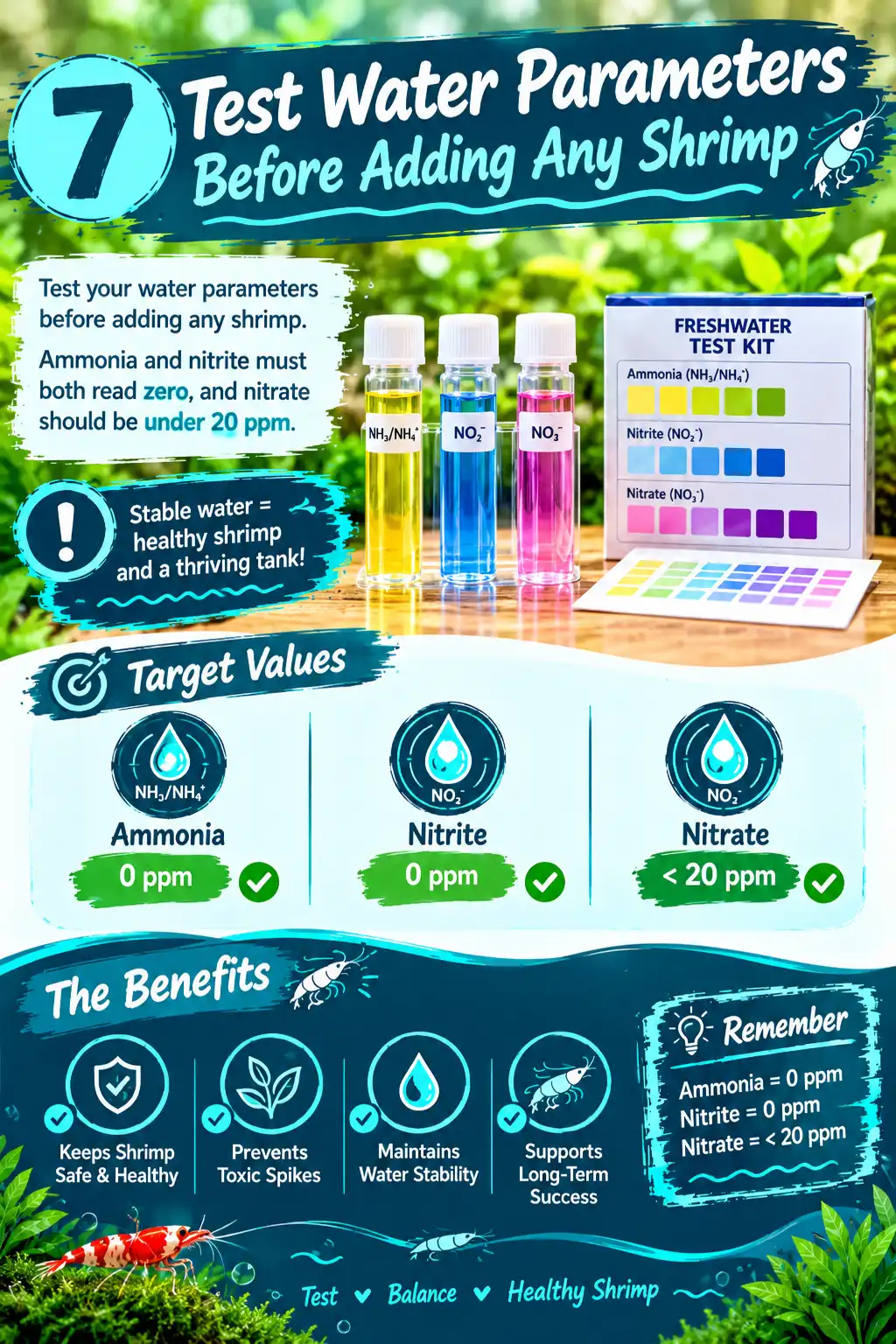
- Test water parameters before adding any shrimp. Ammonia and nitrite must both read zero, and nitrate should be under 20 ppm.
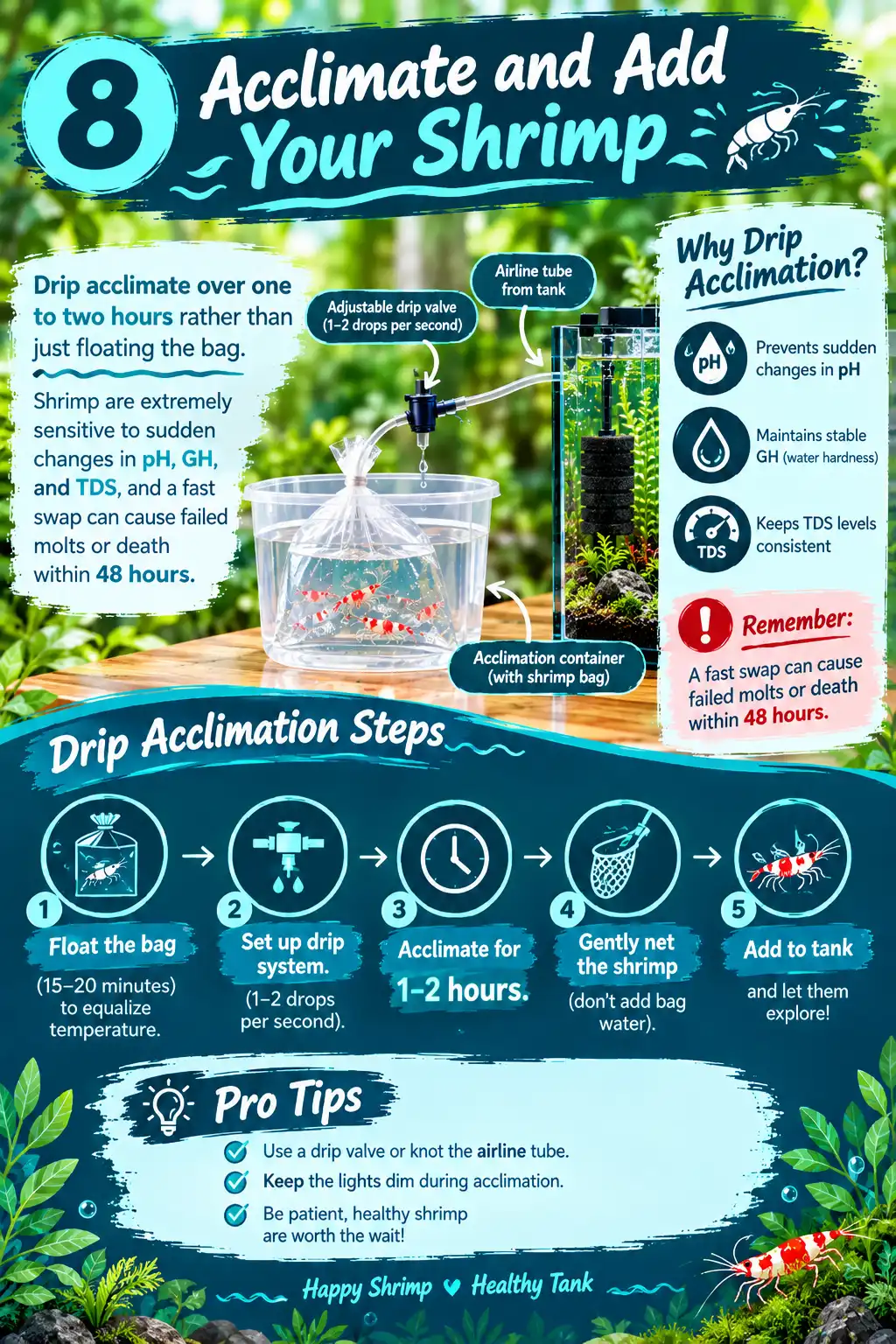
- Acclimate and add your shrimp. Drip acclimate over one to two hours rather than just floating the bag. Shrimp are extremely sensitive to sudden changes in pH, GH, and TDS, and a fast swap can cause failed molts or death within 48 hours.
Best Shrimp Tank Setup Ideas For Every Style
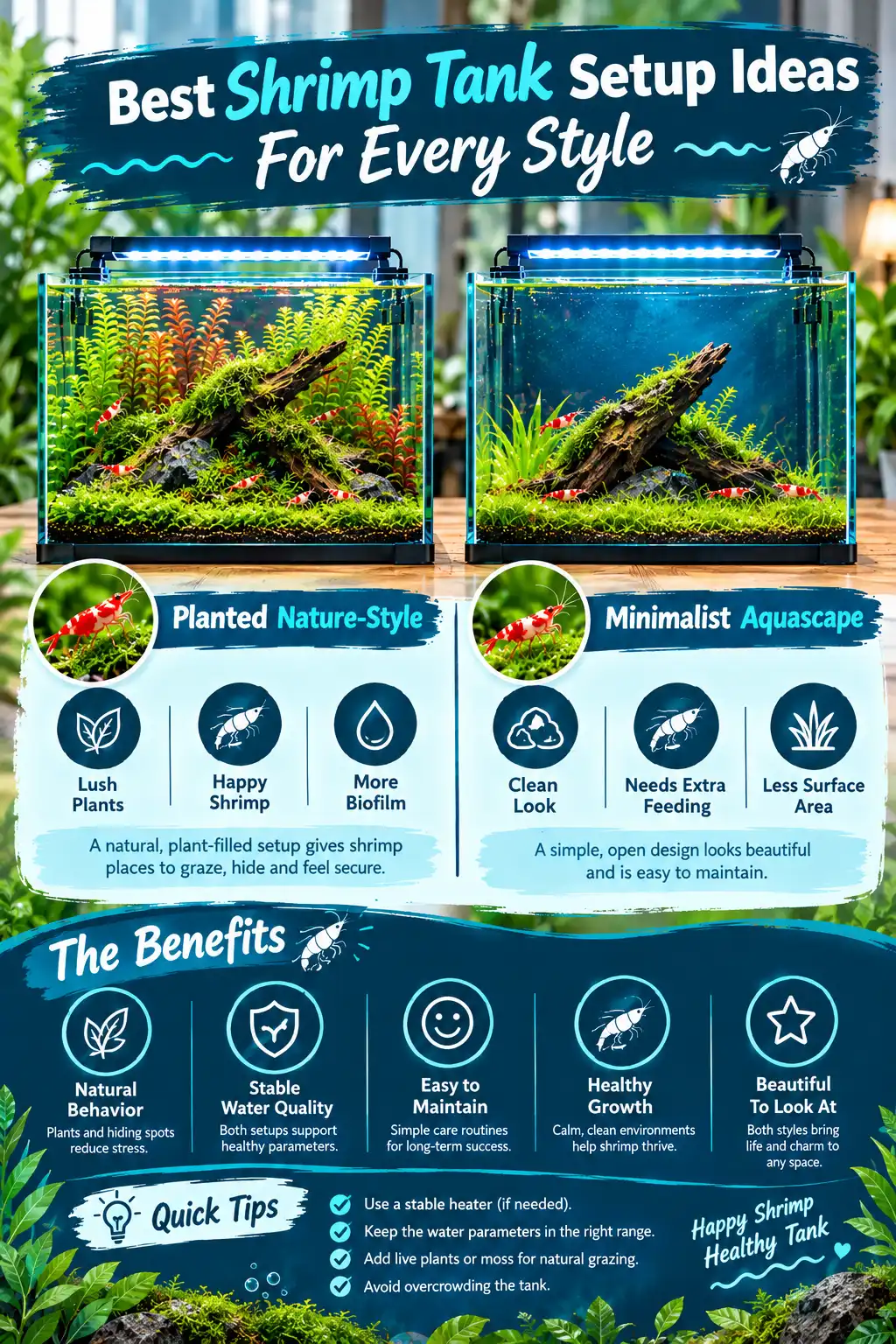
Once the basics are in place, the fun part is designing a tank you actually want to look at. Browsing fish tank aesthetic ideas is a good place to start if you want inspiration beyond the shrimp-specific setups below.
Planted Nature-Style Shrimp Tank
Dense carpeting plants, moss-covered wood, and a mix of stem plants create a jungle look that shrimp love to graze through. This style also produces the most biofilm, which keeps shrimp fed between feedings.
Minimalist Aquascape Shrimp Tank
A single striking piece of driftwood or a small rock arrangement with a carpet of dwarf hairgrass, kept sparse and clean. This style photographs beautifully but needs more supplemental feeding since there is less surface area for biofilm.
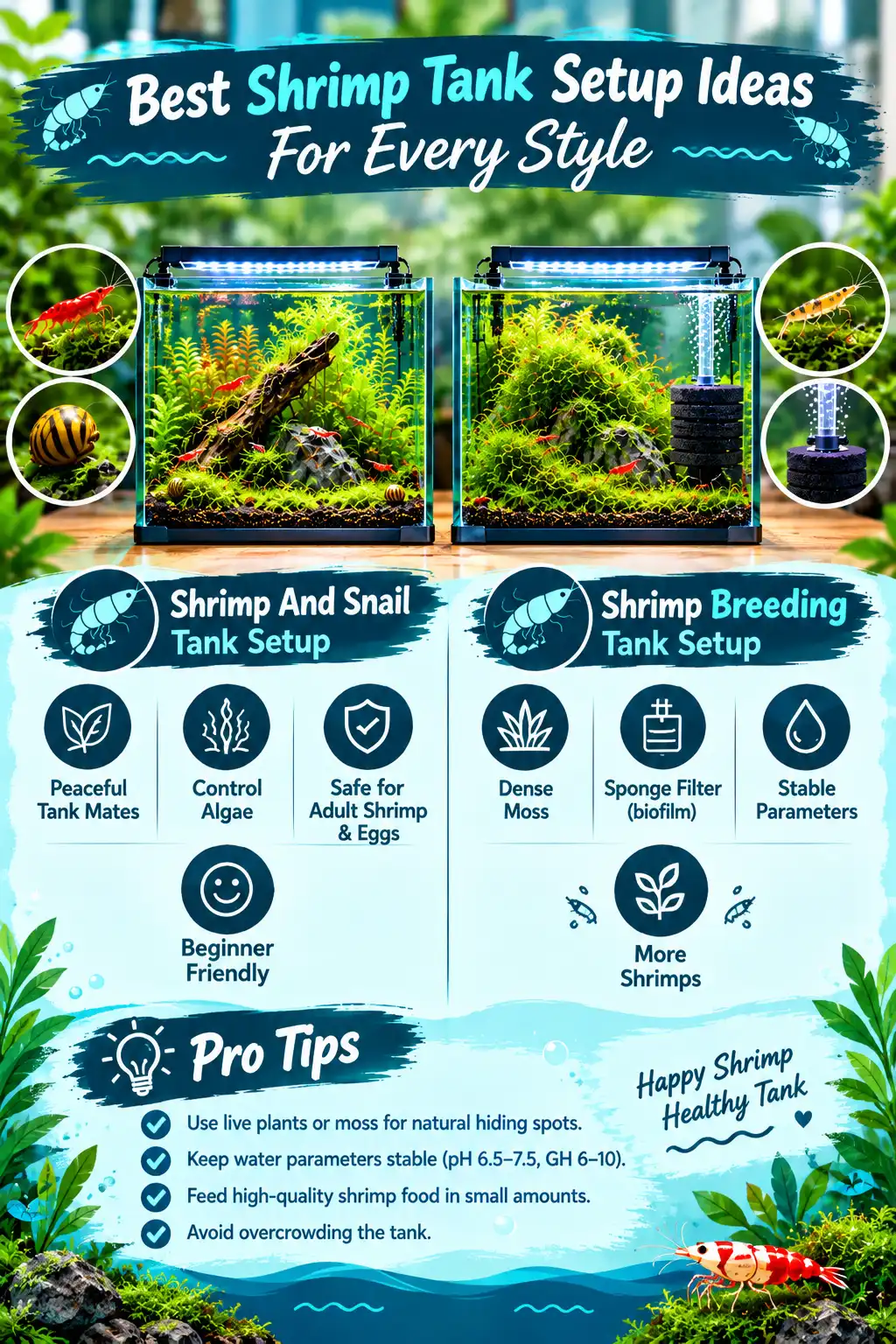
Shrimp And Snail Tank Setup
Nerite and mystery snails are popular tank mates because they are peaceful, help control algae, and will not touch adult shrimp or eggs. This is one of the easiest combinations for a beginner community setup.
Shrimp Breeding Tank Setup
A dedicated breeding setup skips decorative extras in favor of function: dense moss for shrimplets to hide in, a mature sponge filter loaded with biofilm, and stable parameters above anything else. For general layout inspiration that still works well for a functional tank, check out these fish tank ideas.
Cherry Shrimp, Neocaridina & Caridina Tank Setup Essentials
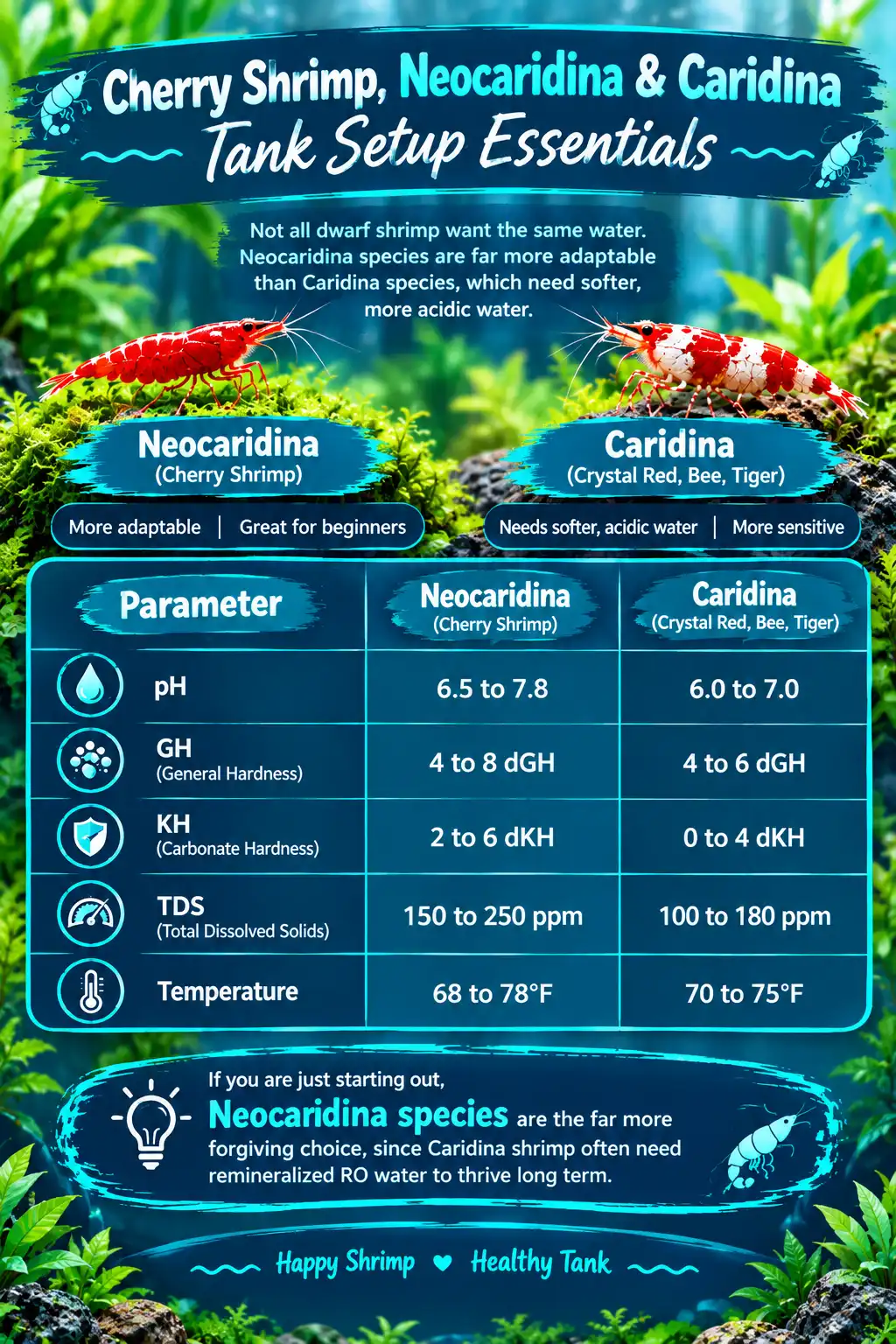
Not all dwarf shrimp want the same water. Neocaridina species (cherry, yellow, blue dream) are far more adaptable than Caridina species (Crystal Red, Bee, Tiger), which need softer, more acidic water.
| Parameter | Neocaridina (Cherry Shrimp) | Caridina (Crystal Red, Bee, Tiger) |
|---|---|---|
| pH | 6.5 to 7.8 | 6.0 to 7.0 |
| GH | 4 to 8 dGH | 4 to 6 dGH |
| KH | 2 to 6 dKH | 0 to 4 dKH |
| TDS | 150 to 250 ppm | 100 to 180 ppm |
| Temperature | 68 to 78°F | 70 to 75°F |
If you are just starting out, Neocaridina species are the far more forgiving choice, since Caridina shrimp often need remineralized RO water to thrive long term.
Freshwater Shrimp Tank Setup: Water Parameters & Maintenance
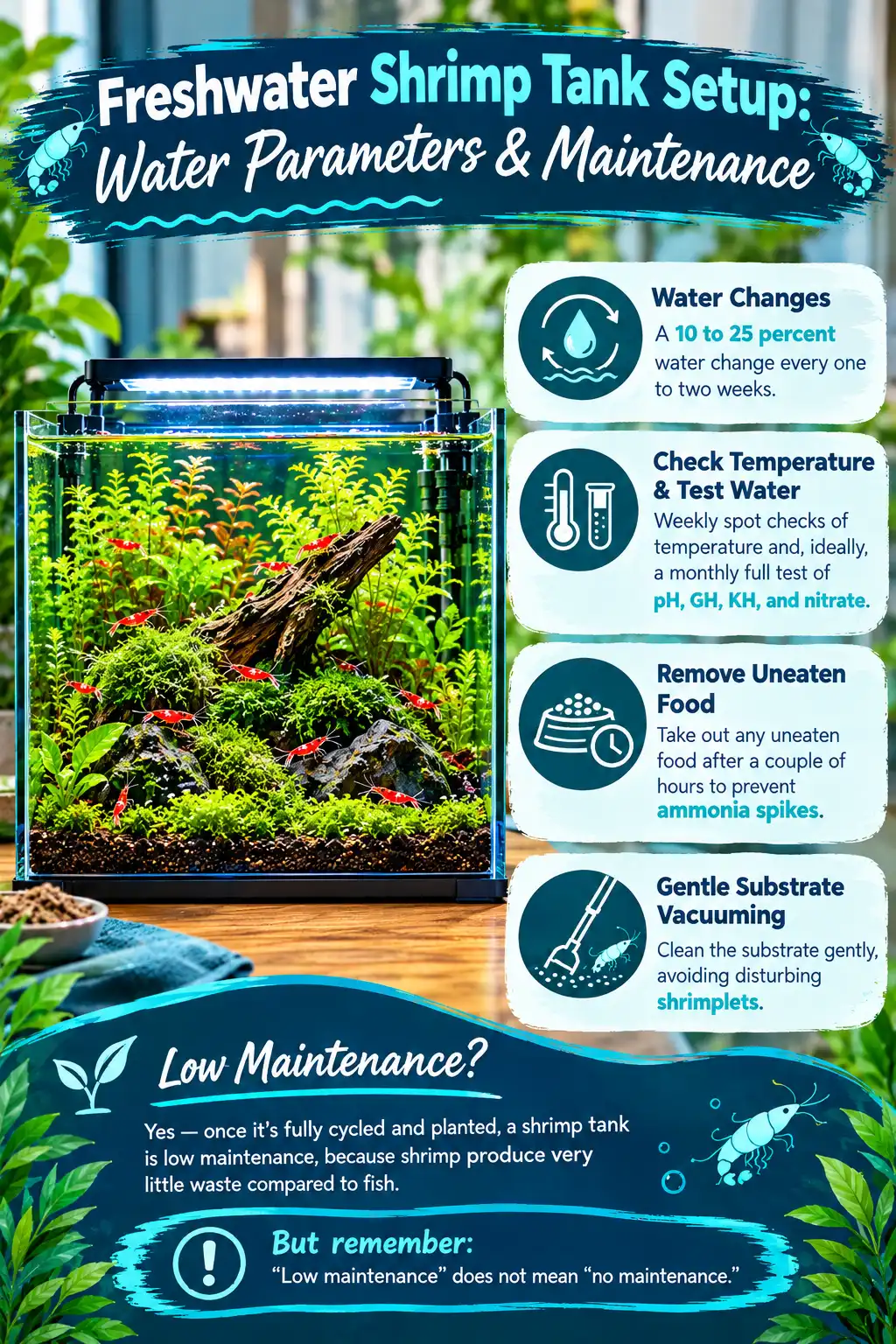
Is a shrimp tank low maintenance? Once it is fully cycled and planted, yes, largely because shrimp produce very little waste compared to fish. That said, “low maintenance” does not mean “no maintenance.” A realistic freshwater shrimp aquarium setup still needs:
- A 10 to 25 percent water change every one to two weeks
- Weekly spot checks of temperature and, ideally, a monthly full test of pH, GH, KH, and nitrate
- Removal of any uneaten food after a couple of hours to prevent ammonia spikes
- Gentle substrate vacuuming that avoids disturbing shrimplets
Shrimp Tank Mates: What Can Live With Your Shrimp?
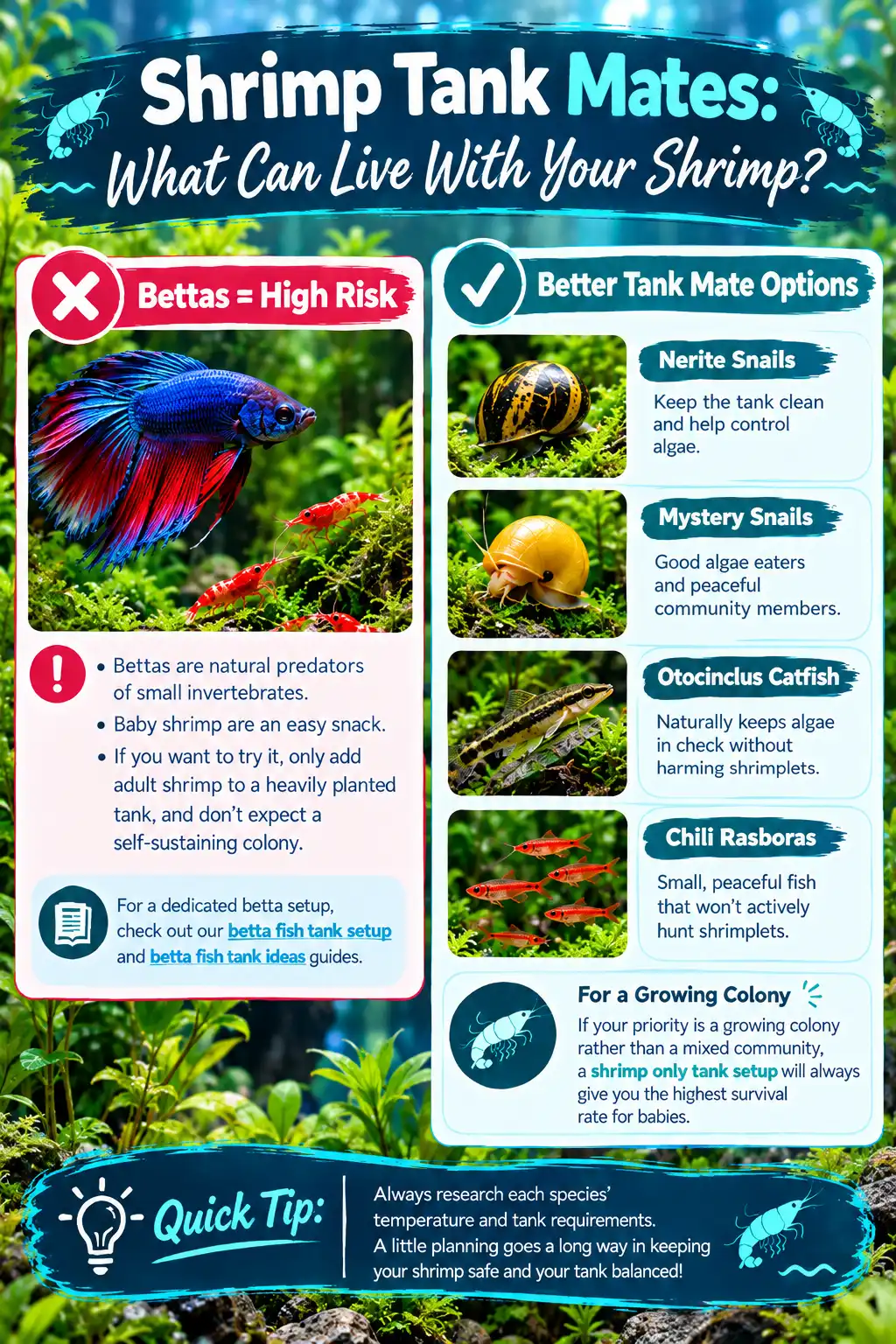
Many beginners want to combine a shrimp and betta tank setup, but this is one of the riskiest pairings you can choose. Bettas are natural predators of small invertebrates, and baby shrimp in particular are an easy snack. If you already have a betta and want to try it, only add adult shrimp to a heavily planted tank, and expect that a self-sustaining colony is unlikely. For a dedicated betta setup instead, our betta fish tank setup guide and betta fish tank ideas post cover that species on its own.
Better tank mate options include nerite and mystery snails, otocinclus catfish, and small peaceful nano fish like chili rasboras that will not actively hunt shrimplets. If your priority is a growing colony rather than a mixed community, a shrimp only tank setup will always give you the highest survival rate for babies.
How Many Shrimp To Start Your Colony?
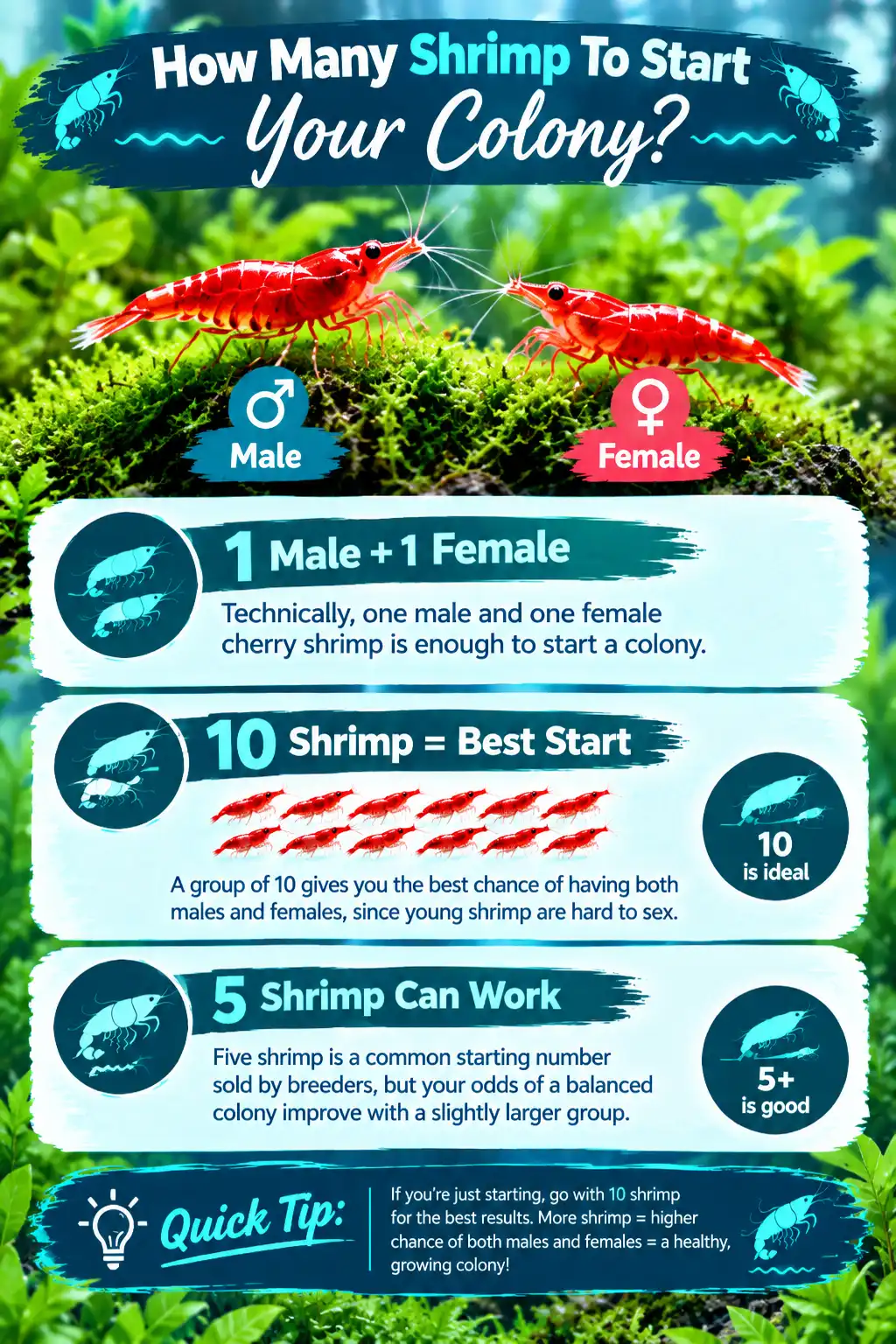
Technically, one male and one female cherry shrimp is enough to start a colony. In practice, most experienced keepers recommend starting with 10, since young shrimp are hard to sex and a group of 10 makes it far more likely you end up with both males and females.
Five shrimp can absolutely work and is a common starting number sold by breeders, but your odds of a balanced colony improve with a slightly larger group.
Common Shrimp Tank Setup Mistakes That Kill Shrimp
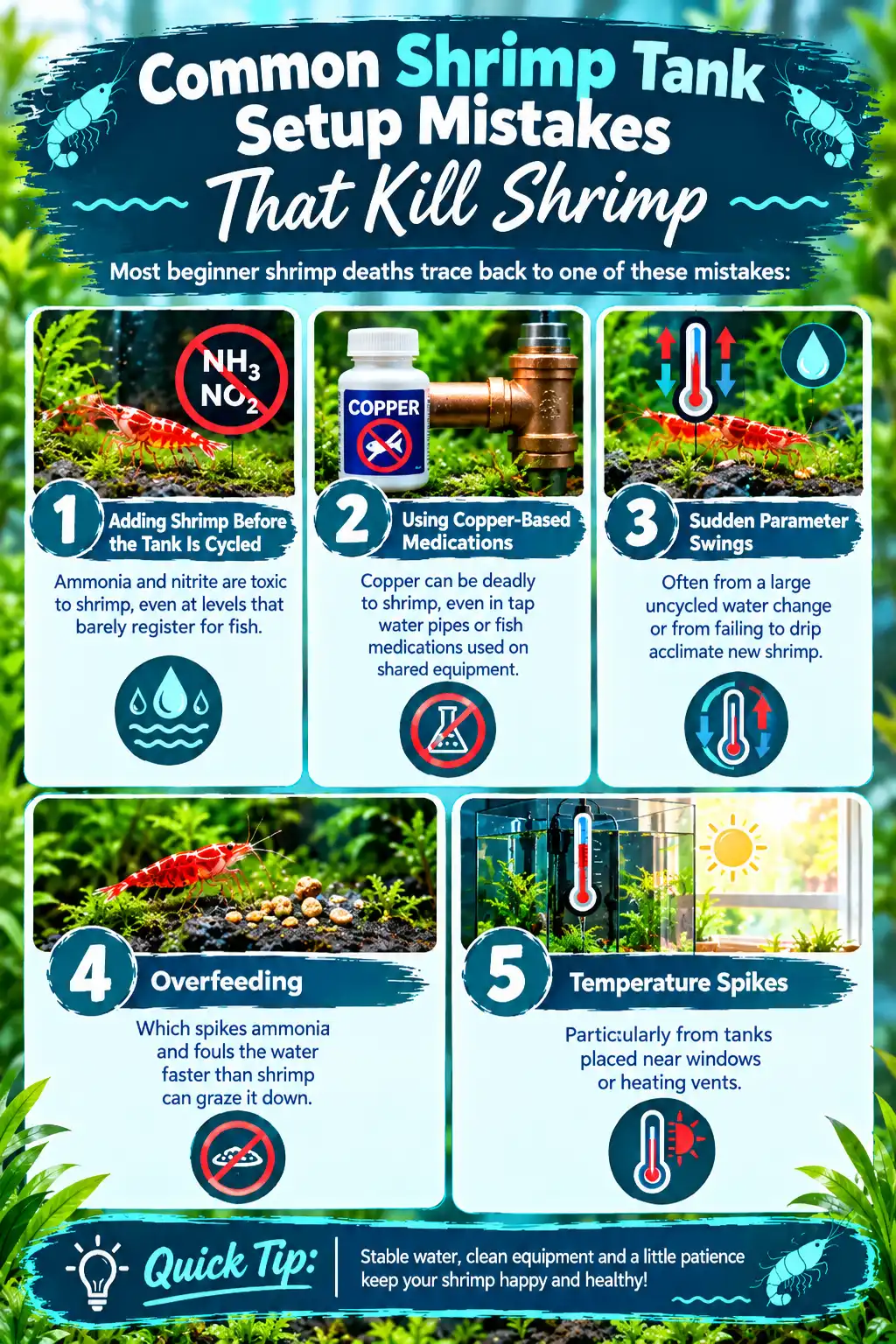
Most beginner shrimp deaths trace back to one of these mistakes:
- Adding shrimp before the tank is cycled. Ammonia and nitrite are toxic to shrimp even at levels that barely register for fish.
- Using copper-based medications anywhere near the tank, including copper in tap water pipes or fish medications used on shared equipment.
- Sudden parameter swings, often from a large uncycled water change or from failing to drip acclimate new shrimp.
- Overfeeding, which spikes ammonia and fouls the water faster than shrimp can graze it down.
- Temperature spikes, particularly from tanks placed near windows or heating vents.
FAQs About Shrimp Tank Setup
Will shrimp survive without an air pump?
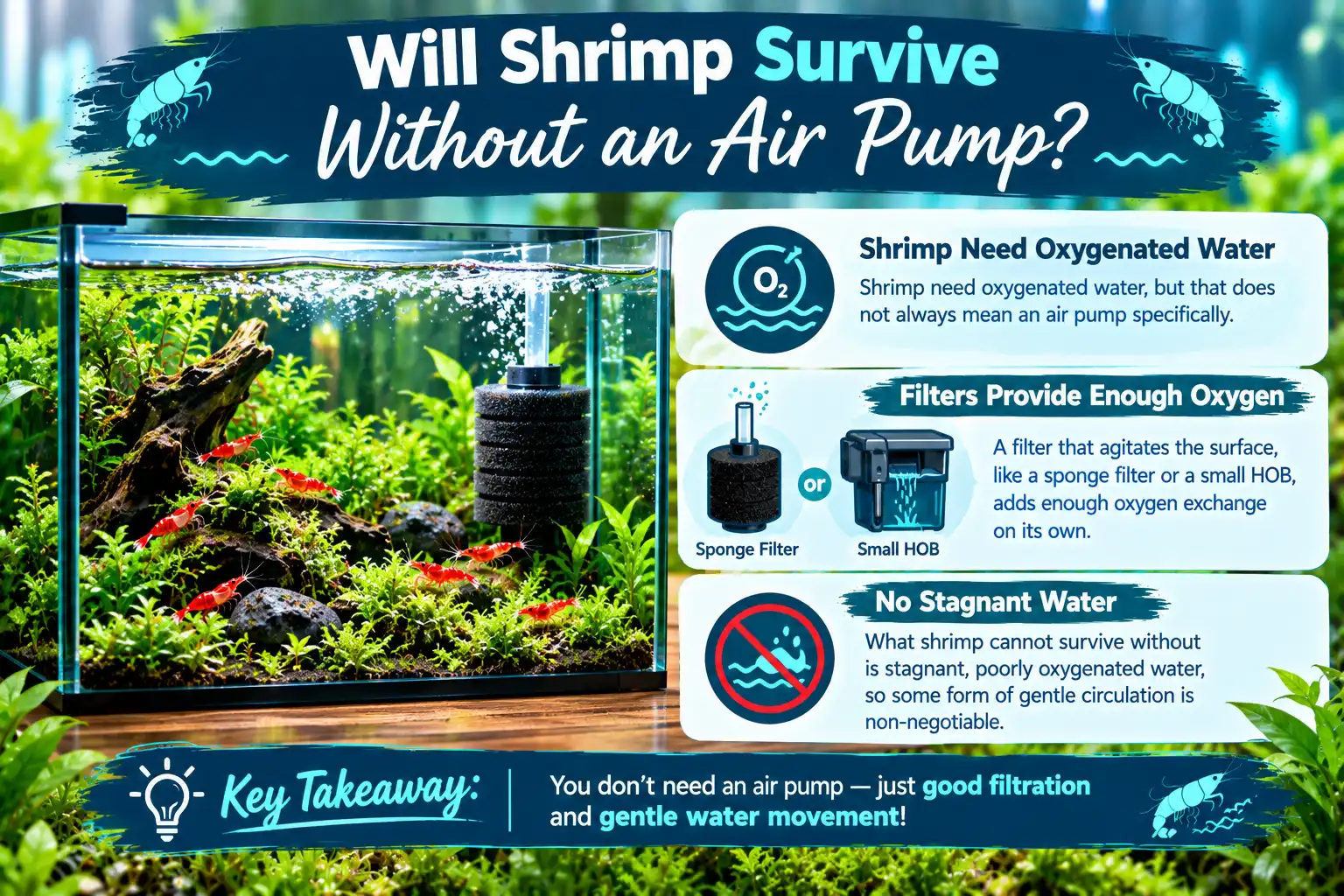
Shrimp need oxygenated water, but that does not always mean an air pump specifically. A filter that agitates the surface, like a sponge filter or a small HOB, adds enough oxygen exchange on its own. What shrimp cannot survive without is stagnant, poorly oxygenated water, so some form of gentle circulation is non-negotiable.
Where do shrimp go at night?
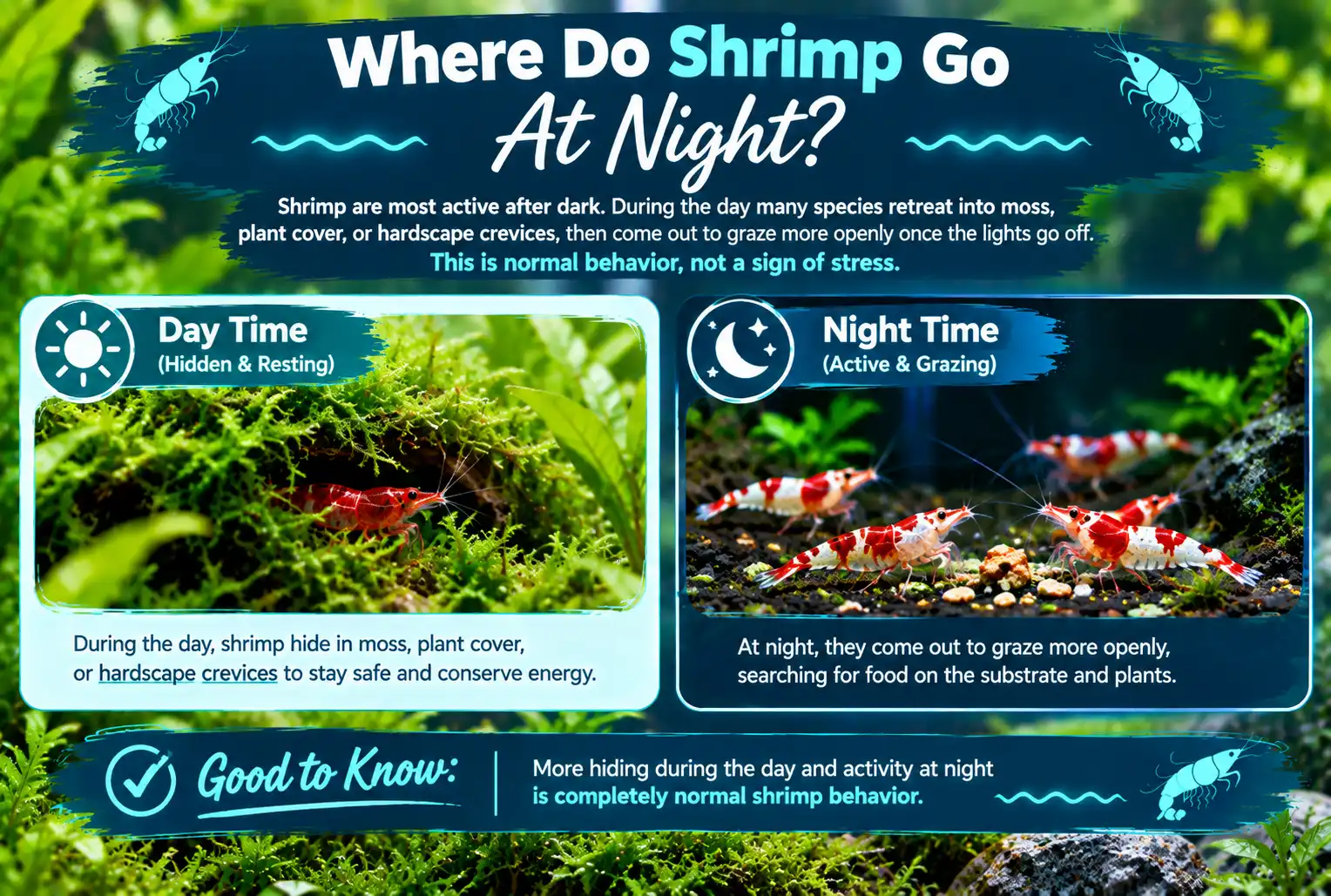
Shrimp are most active after dark. During the day many species retreat into moss, plant cover, or hardscape crevices, then come out to graze more openly once the lights go off. This is normal behavior, not a sign of stress.
Which shrimp breed easily?
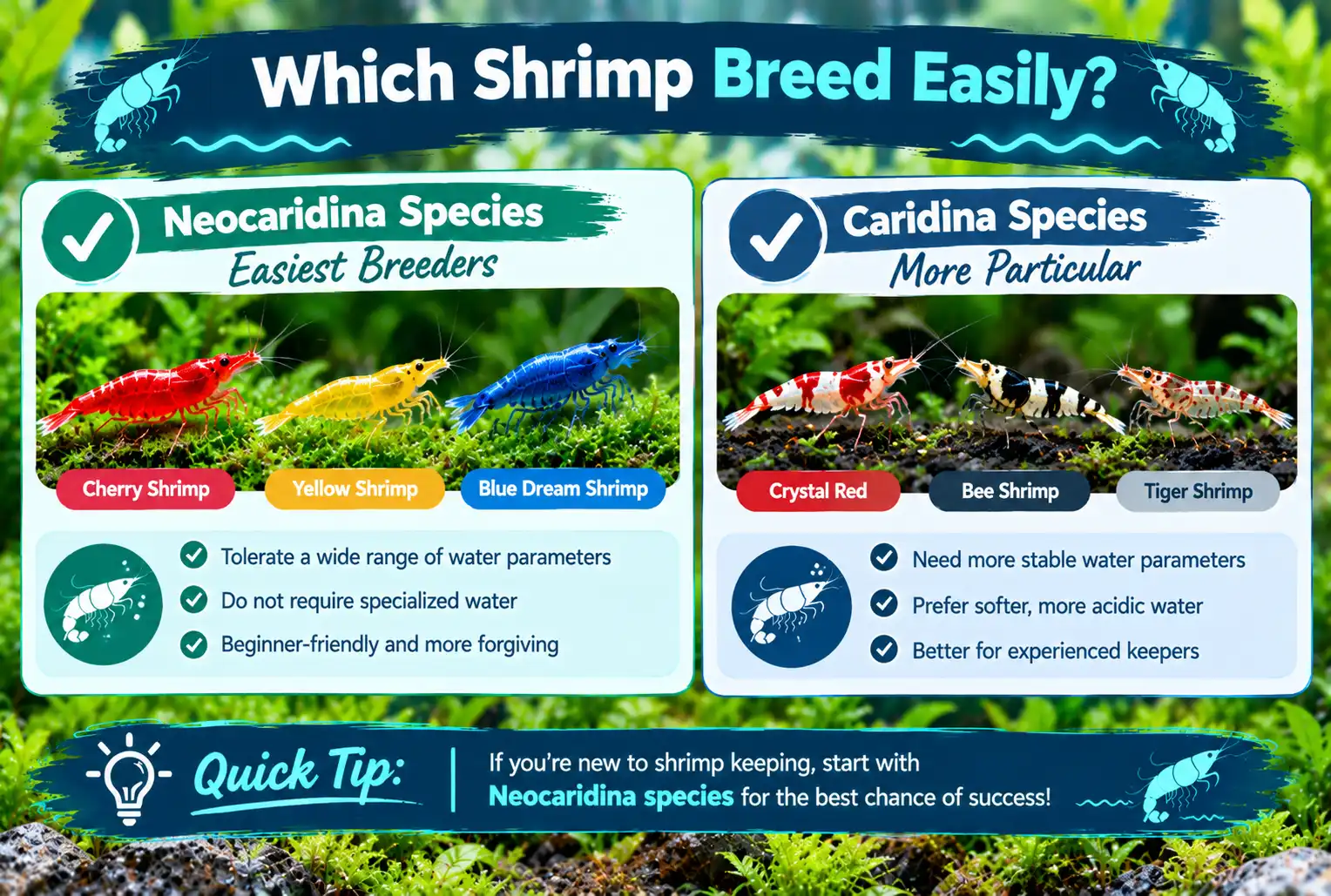
Neocaridina species, including cherry, yellow, and blue dream shrimp, are considered the easiest breeders since they tolerate a wide parameter range and do not require specialized water. Caridina species are more particular and better suited to keepers who already have some experience.
How many months do shrimp grow?
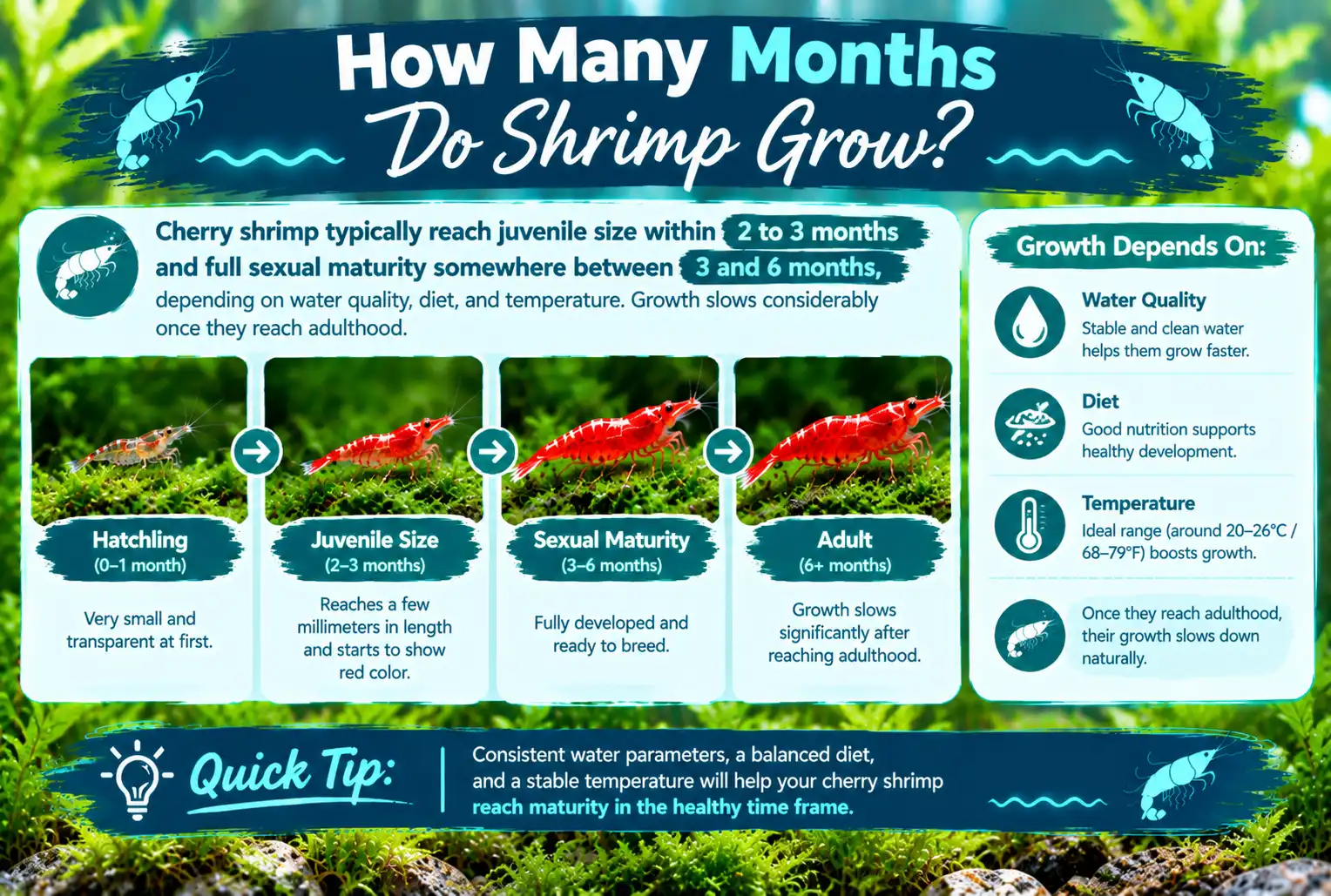
Cherry shrimp typically reach juvenile size within 2 to 3 months and full sexual maturity somewhere between 3 and 6 months, depending on water quality, diet, and temperature. Growth slows considerably once they reach adulthood.
Once your tank is cycled, planted, and holding stable parameters, you are ready to add shrimp and watch a genuinely low-effort little ecosystem take care of itself. For more setup inspiration across other tank types, browse the full fish tanks collection.