Do Starfish Have Eyes? 5 Mind-Blowing Facts for Ocean Lovers
Starfish, also called sea stars, are strange and amazing animals that live in the ocean. They are invertebrates, which means they don’t have a backbone. More than 2,000 species of starfish have been discovered so far.
Starfish don’t have a heart or brain, or even a blood system like us. They are very different from humans. Because of that, scientists wondered for a long time:
“Do starfish have eyes?”
In the past, marine biologists thought starfish might “see” the ocean using only their sense of smell or touch. Although starfish eyes are known for the past 200 years , but scientists were not sure, weather the starfish see with their eyes as we human do see ? But after more research, we learned something surprising.
Quick Answer: Yes, Starfish Do Have Eyes.
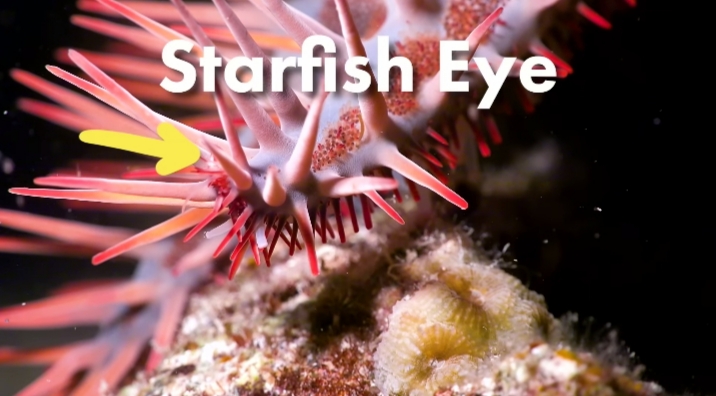
Starfish do have eyes, but they are not like human eyes.
Each arm of a starfish has a tiny eye spot at the tip. They are less than half a millimeter in size. They are like red dots present on the top of their tube feet. So if a starfish has 5 arms, it has 5 little eyes.
These eyes can’t see details like faces or colors. But they can detect light and dark, and they help the starfish food, find its way around, especially when staying away from danger. If you’re curious about how else starfish protect themselves, check out Are Starfish Poisonous? 8 Exciting Facts You Didn’t Know
Where are starfish eyes located?
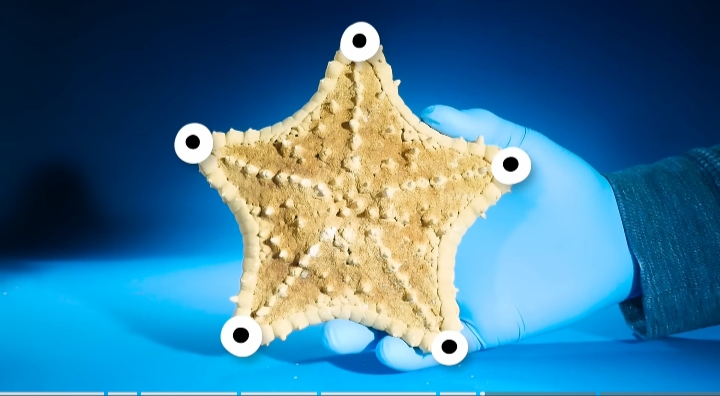
Starfish, or sea stars, have a unique visual system. Their eyes are located at the tip of each arm, a position that provides them with a wide field of view. These eye spots, which often appear as tiny red or black dots, may look similar to the compound eyes seen in arthropods, but biologically, they function very differently. Unlike true optical eyes, starfish eyes lack lenses and cannot form sharp images.
Instead, each eye functions more like a light-sensing organ, helping the starfish detect changes in light intensity and contrast. This allows them to sense obstacles, recognize reef structures, and navigate their environment. Research shows that each arm can bend 80 to 120 degrees upward, effectively lifting the eye and expanding their field of vision, an amazing adaptation despite their simple nervous system and lack of a centralized brain.
On the underside of their body, starfish possess hundreds of tube feet, part of their water vascular system, which they use for locomotion and feeding.
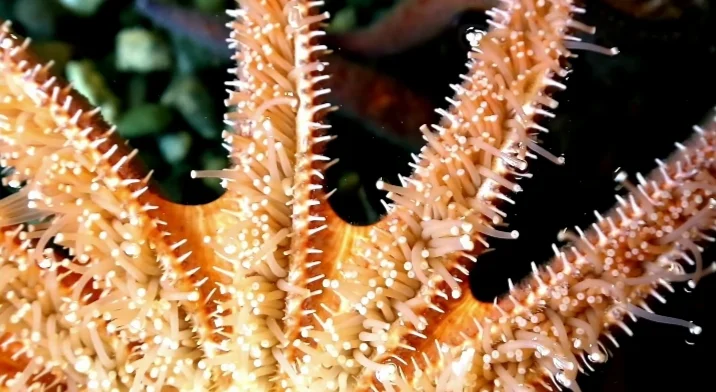
These tube feet are similar in function to those found in sand dollars and are arranged in rows along each arm. Interestingly, near the tips of the arms around the eye spot. the tube feet are modified, forming two protective rows that surround and partially shield the eye, possibly to filter the incoming light from above and below. To learn more about their close relatives, explore The Life Cycle of a Sand Dollar: How Are Sand Dollars Formed? 4 Stages Explained
When a starfish is active, its tube feet extend outward to help with movement. However, when it feels threatened or disturbed, the tube feet retract into the grooves of its body. This behavior also helps protect its sensory organs, including the eyes.
The structure and size of starfish eyes vary by species and individual size. The largest recorded starfish eyes measure around 0.25 mm in diameter and up to 0.6 mm deep. These eyes can contain about 120 photoreceptor cells and a similar number of pigment cells, usually arranged in 7 to 8 distinct layers along the visual axis.
The number of eyes a starfish has depends on the number of arms. Most species, such as the common sea star (Asterias rubens), have five arms and therefore five eyes. However, some species have many more. For example, the sunflower sea star (Pycnopodia helianthoides) can have up to 24 arms and 24 eyes, making it one of the most visually equipped echinoderms. If you’re fascinated by starfish diversity, check out 10 Amazing Kinds of Starfish Found in California Waters to discover even more unique species.
How and what can starfish see?
Starfish possess a simple yet fascinating visual system. At the tip of each arm, they have a compound-like eye structure made up of hundreds of light-sensitive units, known as ommatidia-like photoreceptors. While this setup resembles the compound eyes found in arthropods like insects, there’s a major difference: starfish eyes lack lenses, so they cannot focus light or form sharp images.

Instead, their eyes are used mainly to detect light, darkness, and contrasting shapes in their surroundings. For example, they can distinguish dark silhouettes such as coral reefs, rocks, sea urchins, or predators. This ability helps them avoid danger and navigate toward shelter or food sources like bivalves.
Unlike humans, who have complex eyes with lenses and color-detecting cones, starfish do not see in color. Their eyes are purely monochromatic light detectors, meaning they only perceive light intensity, not hues.

Surprisingly, starfish cannot detect fast-moving objects. Their eyes have slow response times, which matches their slow movement. For example, a starfish typically moves at a speed of around 15 cm (6 inches) per minute, and their visual response time is measured in seconds—not milliseconds like human eyes. This means if a fish swims past quickly, the starfish likely won’t register it visually at all.
Still, their low-resolution eyes are useful in specific ways. Research shows that starfish can detect objects that are about 3 feet (1 meter) in front of them, using approximately 200 photoreceptive pixels per eye. While this may seem primitive, it’s sufficient for spotting large, dark structures in their environment.
Most starfish are diurnal, meaning they rely on their vision mainly during the daytime. Examples include the Blue Sea Star (Linckia laevigata), the Ochre Sea Star (Pisaster ochraceus), and the Royal Starfish (Astropecten articulatus). Their ability to detect light helps them avoid harmful structures like coral reefs, which can injure their soft bodies. Interestingly, starfish can detect these reef structures with their eye spots and instinctively move away from them to avoid getting trapped or damaged.
In 2023, marine biologists published new findings on tropical starfish vision. They confirmed that the blue sea star (Linckia laevigata) can actually distinguish large reef structures from over 1 meter away, proving that their eyesight is more functional than previously believed. This supports earlier work by Garm and Nilsson but shows starfish vision may be more widespread among species than expected.
How Starfish Use Their Eyes for Finding Food and Avoiding Predators
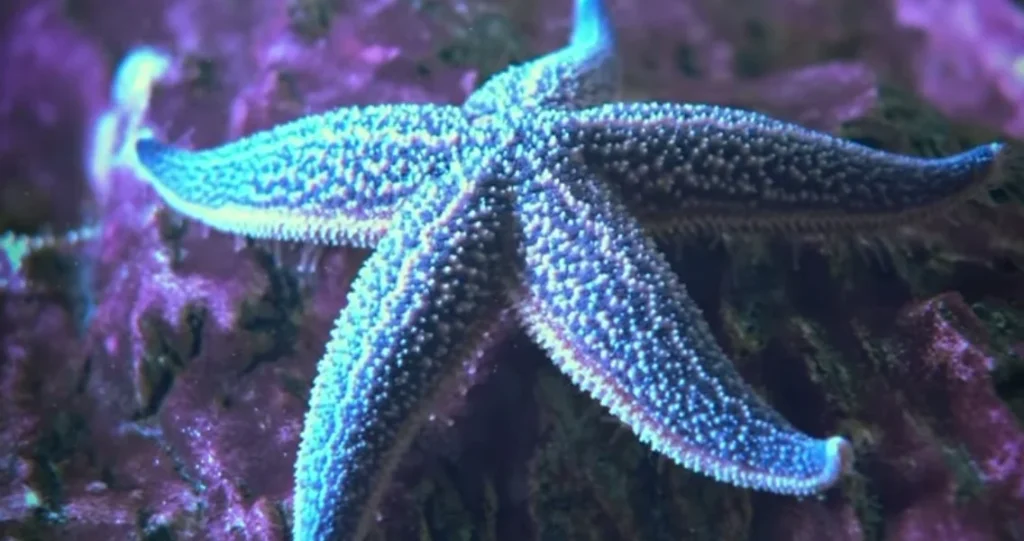
Starfish rely on their eye spots not just for navigation, but also for locating food and avoiding danger. These eye spots, located at the tip of each arm, allow them to detect light, shadows, and the presence of objects in their environment—including prey and predators.
Starfish primarily feed on benthic invertebrates, especially bivalves like mussels, clams, oysters, and scallops. In addition, they consume algae, detritus, and microscopic organisms like bacteria and plankton. Other food sources include barnacles, sea cucumbers, snails, and dead organic matter. When it comes to feeding on microorganisms, starfish use their tube feet and mucus-coated surfaces to trap and transport microscopic food particles to their central mouth, located on the underside of their body.
Interestingly, some potential prey emit bioluminescence—they glow in the dark. This includes certain types of plankton, jellyfish, marine worms, and small crustaceans. Starfish can use their dot-like eyes to detect these glowing cues in low light, helping them locate food in dim or nocturnal marine environments.
Starfish eyes also help them flee from predators. If a predator such as a sea otter, fish, or crab approaches, the starfish can sense its presence and slowly begin to move away. While their response is not fast, their ability to detect light and shadow contrasts still gives them a chance to escape.
Research on Starfish Vision: The Work of Garm and Nilsson
Two well-known researchers, Ulrik Garm of the University of Copenhagen and Dan-Eric Nilsson of Lund University in Sweden, conducted important experiments to understand how starfish use their vision. In controlled laboratory conditions, they studied the crown-of-thorns starfish (Acanthaster planci) to test how vision affects movement.
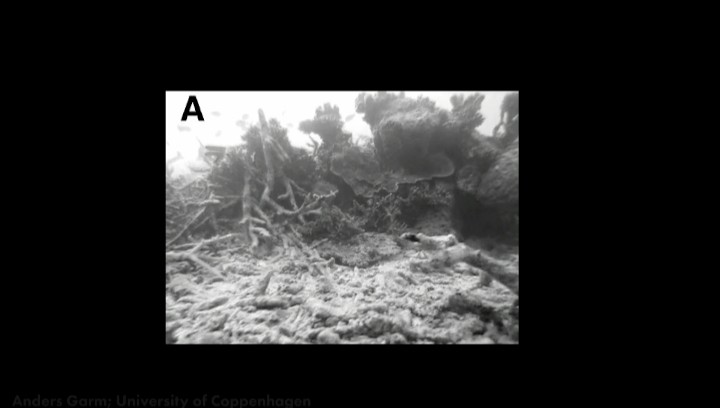
In their experiment, the researchers intentionally blinded some starfish by covering their eye spots, while leaving others unaltered. Both groups were placed 1 meter away from a coral reef, a natural structure that starfish usually seek out for food or shelter.
The results were striking: the sighted starfish were able to detect and move toward the reef in less than 30 minutes. In contrast, the blinded starfish wandered randomly, unable to locate the reef. This showed that starfish rely heavily on their visual system for orientation, especially at short distances.
Garm and Nilsson also found that starfish only respond directionally to coral reefs if the reef takes up more than 30° of their visual field, meaning their vision works best at close range. This also explains why their eyes are located on the outermost tips of their arms, allowing them to gather the widest possible visual input while scanning the environment.
Another intriguing reason for starfish to have eyes is communication, especially in bioluminescent species like Diplopteraster multipes. These starfish can emit light signals, possibly to attract mates or warn other individuals. Although the full extent of this communication is not yet fully understood, it’s likely that visual signaling plays a role in reproduction or group behavior.
In 2014, researchers made a key discovery about the eyes of tropical sea stars. While starfish are not true fish—they are echinoderms—they do have simple eye spots at the tips of their arms. These eye spots are not capable of forming clear images like human eyes, but scientists found that they can create rough visual patterns. This ability helps starfish detect large objects, such as reefs or predators, and prevents them from wandering aimlessly in the ocean.
Dr. Christopher Mah, a marine biologist at the Smithsonian National Museum of Natural History in Washington, D.C., called this discovery a “significant breakthrough” in understanding how starfish perceive the world around them. Before this study, it was believed that starfish relied mostly on touch and chemical sensing. This research showed that vision plays a bigger role in their behavior than previously thought.
This finding has helped marine biologists better understand how starfish navigate, find food, and avoid threats, even with such basic visual organs.
Do Starfish can regenerate their eyes?
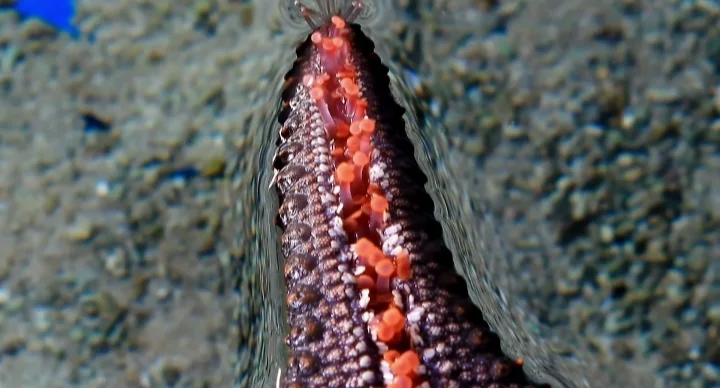
Yes….starfish are well known for their incredible regenerative abilities. Not only can they regrow lost limbs, but in some species, they can regenerate entire bodies from a single arm, as long as part of the central disk remains attached.
This regeneration ability plays a crucial role in their survival. When a starfish is attacked by a predator—such as a fish or crab—or gets an arm trapped under a rock, it may lose or shed an arm. The cells responsible for regeneration, called undifferentiated stem-like cells, begin to multiply and replace the missing tissues. Over time, the starfish can completely regrow the lost limb, including its tube feet, muscles, and even the eye spot located at the arm’s tip. This means starfish can regenerate their eyes if an arm is lost and regrown.
This process, known as autotomy, is a defensive mechanism. Some species can even intentionally shed their arms when under stress. If the detachment happens close enough to the central body, and if some portion of the central disk is included with the arm, that fragment can grow into an entire new starfish, genetically identical to the original. This type of reproduction is called asexual reproduction through fragmentation.
Species like the Luidia ciliaris and Linckia multifora are famous for this capability. For example, Linckia multifora can regrow from an arm fragment, sometimes referred to as a “comet” due to the star-like shape as it regenerates the rest of its body.
Recent studies suggest that climate change and warming ocean waters could affect starfish eyesight. Since their eye spots are sensitive to light, shifts in water clarity and coral reef bleaching may change how effectively they can navigate and find food. Scientists are now investigating whether certain starfish species may adapt by relying more on chemical senses if visibility in the ocean decreases.
Do all starfish have eyes?
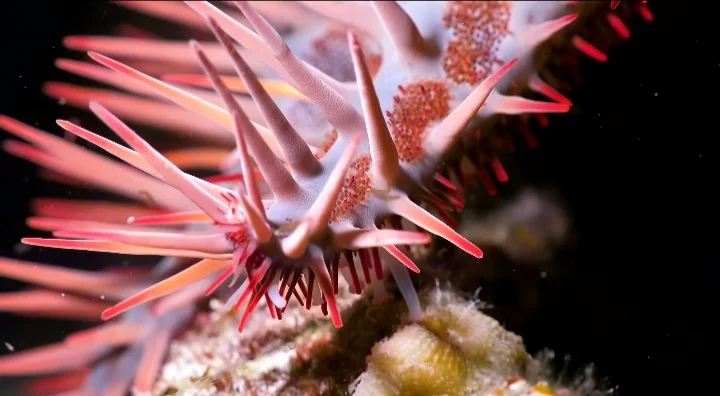
There are about 2,000 different species of starfish, and each species lives in a different type of environment. For example, species like the Blue Sea Star (Linckia laevigata) live in warm tropical waters, where the temperature ranges from 24°C to 30°C (75°F to 86°F). Some starfish, such as those in the Brisingidae family, are found in the deep sea, often at depths of over 1,000 meters (3,280 feet). Others live in the cold waters of the Arctic Ocean, where temperatures can drop below -1.8°C (28.8°F).
Just like humans and other animals, starfish have adapted to survive in different environments. Because of this, not all starfish have eyes. If a species depends on vision, it develops eye spots. But if it doesn’t need vision in its daily life, it may not develop eyes at all.
One such example is the starfish Ctenodiscus crispatus. Scientists have found that this species does not have eyes, not because of the ocean depth, but because of its lifestyle. Like a sand dollar, C. crispatus lives a burrowing life, staying hidden under the sand or mud to protect itself from predators. Since it spends most of its time underground, it doesn’t rely on sight, so it has no need for eyes.
This shows that in nature, if a feature is not useful for survival, animals may lose it over time through evolution.
Interestingly, recent studies suggest that even Arctic and deep-sea starfish rely on vision for navigation—not just tropical species. In one study, scientists examined 13 species of sea stars, including some from cold and deep marine environments. Among them, two species were bioluminescent, meaning they may use light signals for communication, possibly during mating or to interact with other individuals.
The researchers also studied tropical species, such as the well-known Blue Sea Star (Linckia laevigata), found in the Indian and Pacific Oceans. Their work provided new insights into how vision, even in its simplest form, is used by various sea stars in different habitats.
These findings were published on January 7, 2014, in the respected scientific journal Proceedings of the Royal Society B, highlighting that starfish vision is more important and widespread than previously believed.