Where Can You Find a Lobster Teeth? 7 Amazing Facts About Their Gastric Mill
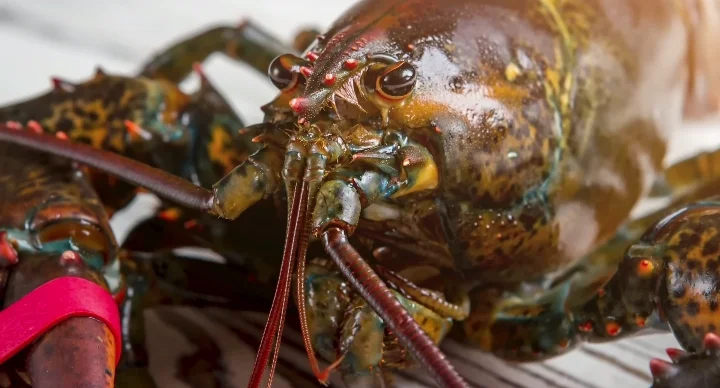
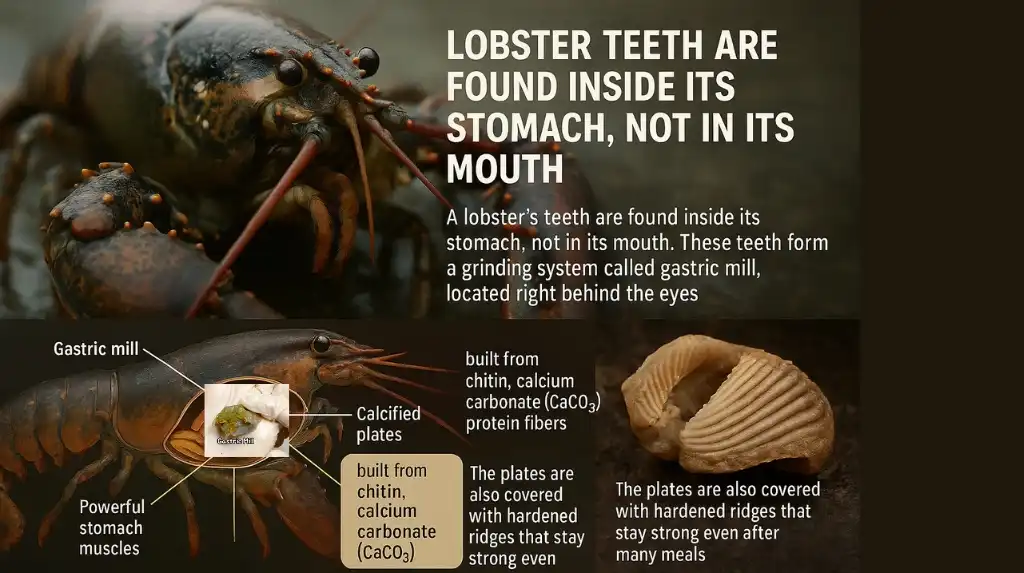
A lobster’s teeth are found inside its stomach, not in its mouth (see how a lobster mouth works). These teeth form a grinding system called the gastric mill, located right behind the eyes.
The gastric mill is made of three calcified plates (ossicles) that grind food inside the stomach, built from chitin, calcium carbonate (CaCO₃), and protein fibers. The plates are also covered with hardened ridges that stay strong even after many meals. It works like a biological grinding machine. When the lobster eats, powerful stomach muscles pull these plates together, crushing food, including shells and even other lobsters, during Lobster cannibalism.
Powerful stomach muscles pull the plates together in a rhythmic pattern, rubbing the plates against each other. This action:
- Crushes food: breaks shells and tough tissues.
- Grinds food: reduces it into tiny pieces that the lobster can digest.
- Slices soft tissue: the hardened ridges act like saws to cut food.

After grinding, the food particles are small enough to pass into the midgut gland, where nutrients are absorbed.
This unique design makes lobsters part of the very small group of animals that chew their food inside their stomach instead of using mouthparts for chewing.
During my time studying American lobsters (How Do Lobsters Communicate With Each Other?) in labs and field surveys, I observed their feeding system many times. Their internal chewing structure shows how well crustaceans adapt to life on the seafloor.
Funfact:
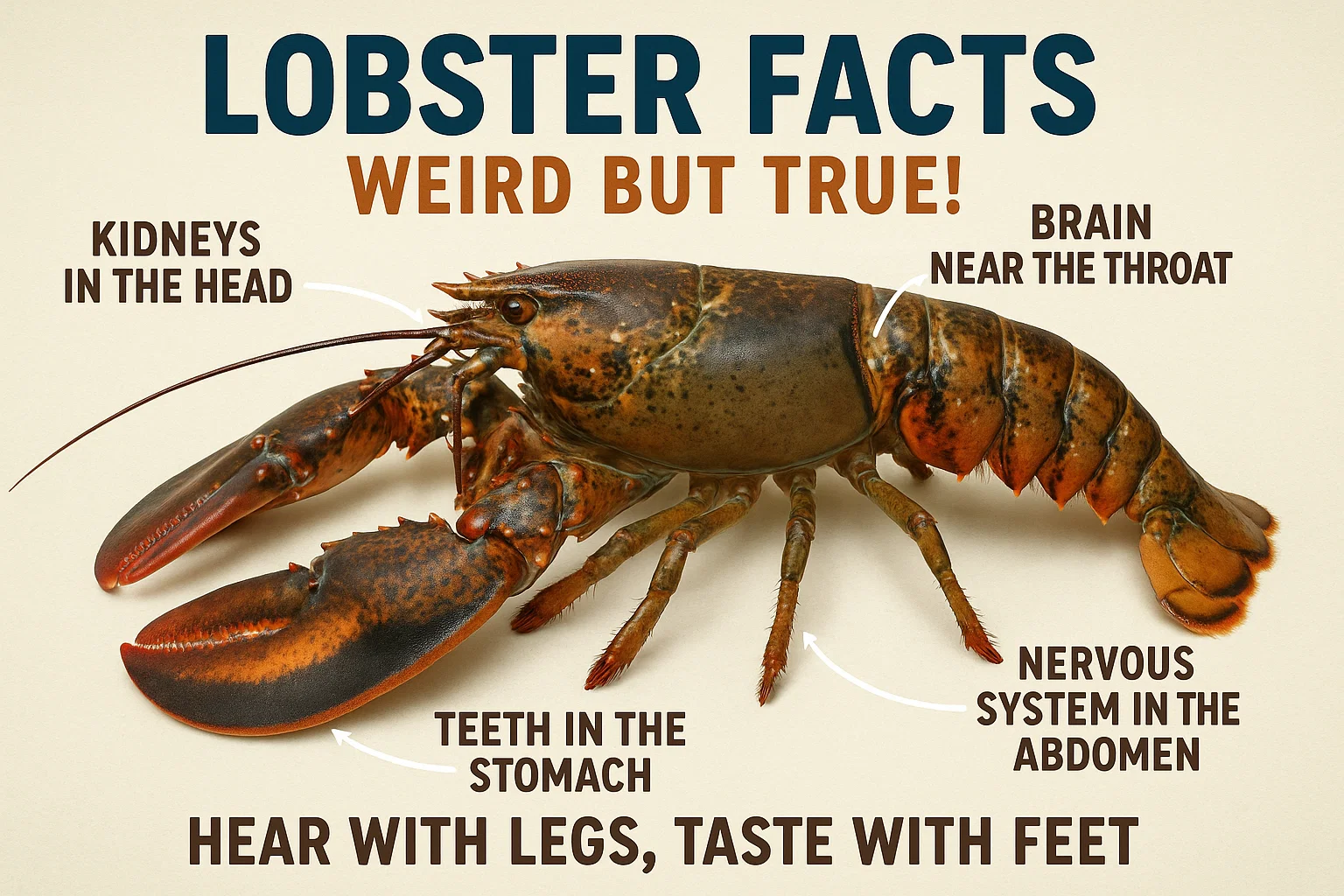
A lobster’s brain is above its esophagus (behind the eyes), its main nerve cord runs along the abdomen, its teeth are in the stomach, and its kidney (green gland) is near the head.
Unique Anatomy of a Lobster
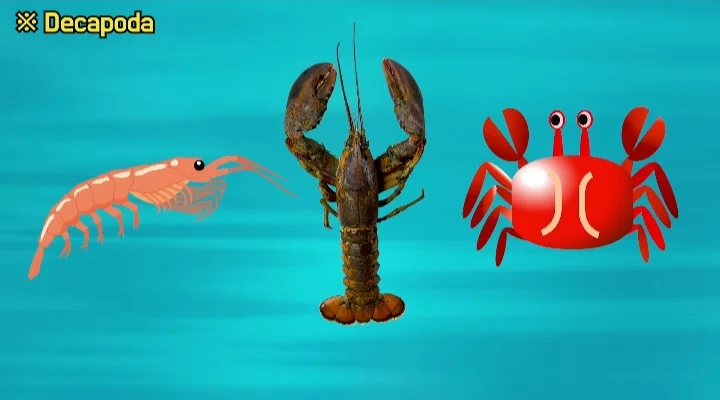
Lobsters belong to the group Decapoda, which includes crabs and shrimp. They have ten legs, large claws (in certain species), and strong muscles that help them move across rocks and sand.
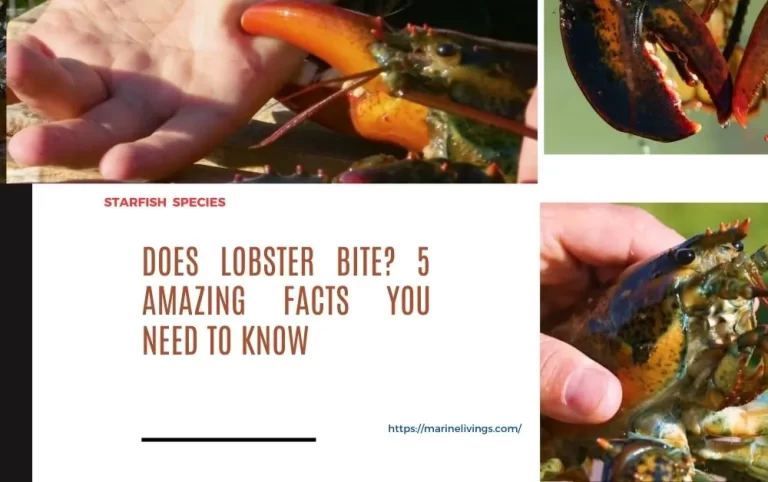
Lobster Claws: Pincer and Crusher Explained

Lobsters in the Decapoda group have two main claws, each built for a different job. These claws are enlarged versions of the first pair of legs.
1. The Pincer Claw (Cutter Claw)

This claw has sharp, thin edges designed for quick movements. Biologically, it works like a pair of scissors.
It helps the lobster:
- slice soft prey
- grab fish or worms
- react fast during defense
- tear food into smaller pieces before it reaches the mouth
The pincer claw is lighter, faster, and built for speed. Its shape comes from muscle arrangement—the fast-twitch muscle fibers give it quick snapping power.
2. The Crusher Claw
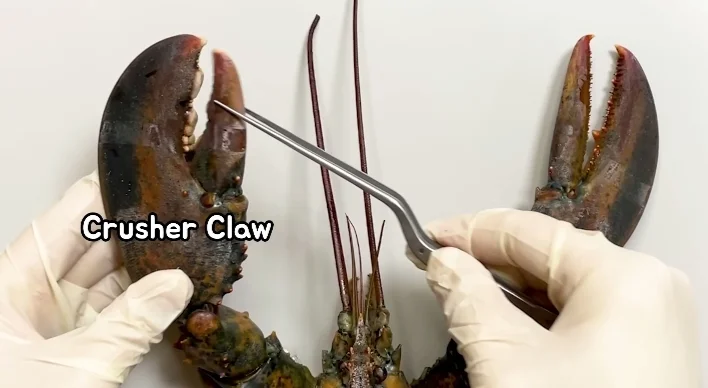
The crusher claw is larger, thicker, and has rounded bumps that act like natural grinding surfaces.
This claw helps the lobster:
- crack open hard shells
- break snails, clams, or small crabs
- hold prey tightly
- defend against predators
The crusher has slow-twitch muscles that create strong force. Studies show the crusher claw can generate forces from 400–500 PSI, strong enough to crush tough shells.
Why the Two Claws Are Different
A young lobster starts with two similar claws. As it grows, it begins to use one claw more than the other. The claw it uses more often becomes the crusher, and the other becomes the pincer. This process is called claw asymmetry.
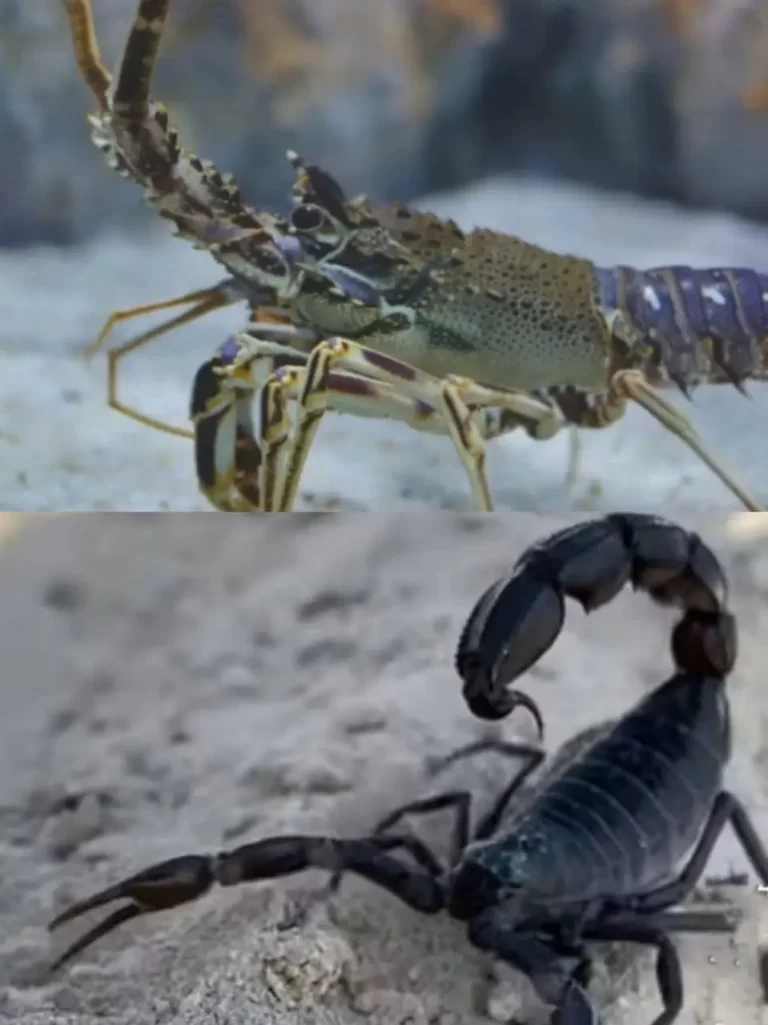
Not All Lobsters Have Big Claws
American and European lobsters have large claws.
Rock lobsters and spiny lobsters do not have big claws. They rely on:
- antennae
- tail strength
- armor-like shells
This difference helps scientists separate clawed lobsters from spiny lobsters in the Decapoda group
Their internal structure is just as interesting as their outer shell.
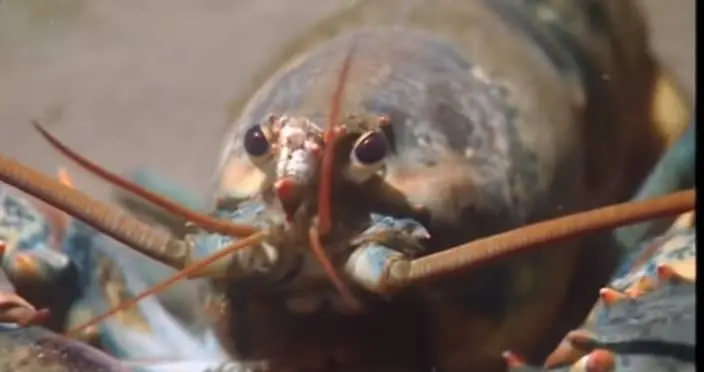
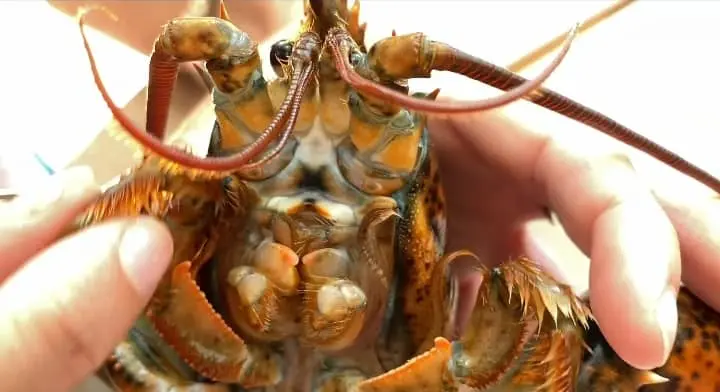
The Lobster Mouth: More Complex Than It Looks
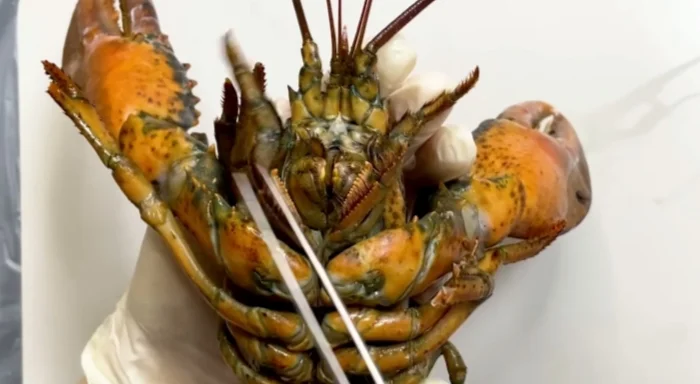
A lobster’s mouth area has several parts working together:
- Mandibles: These are small jaw-like structures that help break soft items and push food inside.
- Maxillipeds: These act like feeding arms that move food toward the mouth.
- Sensory hairs: These help a lobster taste and feel what it is eating.
While the mouth helps guide food inward, it does not perform real chewing. If you are curious about how strong a lobster’s mouth is or whether does lobster bite, you can read more here.
The Real “The Gastric Mill: The Real ‘Teeth’ of a Lobster
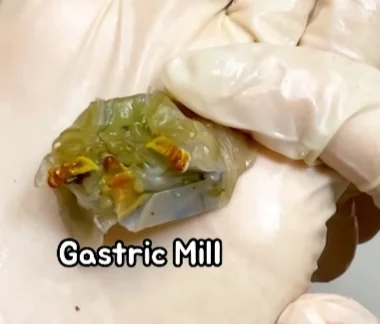
If you are looking for a lobster’s teeth, you won’t find them in its mouth. The actual teeth are inside the stomach, in a grinding unit called the gastric mill. This structure sits directly behind the eyes, inside the cardiac stomach, and works like a fully built internal chewing machine.
The gastric mill is made of three major grinding plates:
- One medial tooth (center plate)
- Two lateral teeth (side plates)
Each plate is strengthened with calcium carbonate, chitin, and protein fibers, giving them the hardness needed to crush shells, bones of small prey, and thick tissue.
How the Gastric Mill Works (Deep Biological Explanation)
The plates of the gastric mill move because of powerful stomach muscles attached to them. These muscles contract in a rhythmic motion, pulling the plates together.
Biologically, the system works through three actions:
- Crushing:
The plates press food between them, breaking shells, exoskeletons, and tough muscle fibers. - Grinding:
The ridges on the plates rub against each other, reducing food into particles smaller than 0.5 mm, which the lobster can digest easily. - Shearing:
The sharp chitin-covered edges slice through soft tissues like fish flesh and algae.
Internal Structure Details
Each grinding plate includes:
- Calcium-rich surfaces for hardness
- Chitin layers for toughness and flexibility
- Cross-linked proteins that resist breaking
- Serrated ridges that sharpen naturally through use
- Ligament-like joints that help plates snap back into place
This design allows lobsters to chew inside their stomach with 4–6 contractions per second. During heavy feeding, the gastric mill can complete over 10,000 grinding cycles in one session.
Why This System Is Special
Their mouthparts only tear food into chunks. Many people confuse their body structure with spiders, leading to questions like Are lobsters arachnid. The real mechanical digestion starts after the food passes the mouth, when the stomach teeth take over.
The gastric mill is so effective that it can:
- Crush clam shells
- Break down crab exoskeletons
- Grind tough seaweed
- Process prey almost as hard as the lobster’s own shell
This makes the lobster a powerful bottom-dwelling predator that can eat a wide range of prey.
TIL Lobsters Chew With Their Stomach
The phrase “TIL lobsters chew with their stomach” appears often online. It is true. Food goes from the mouth through a short tube called the esophagus and into the stomach, where the gastric mill grinds it.
In my research, I sometimes placed small bits of shell inside the gastric mill during dissections to show students how easily it crushes hard material.
Lobster Digestion: A Quick Biological Look
After the gastric mill crushes the food, it passes into the pyloric stomach, a second chamber that filters and sorts particles.
After the gastric mill finishes grinding the food, it moves into the hepatopancreas, one of the most important organs in a lobster’s body. Biologically, this organ works like a combined liver and pancreas. It sits in the cephalothorax (the head–chest region) and fills much of the inner space.
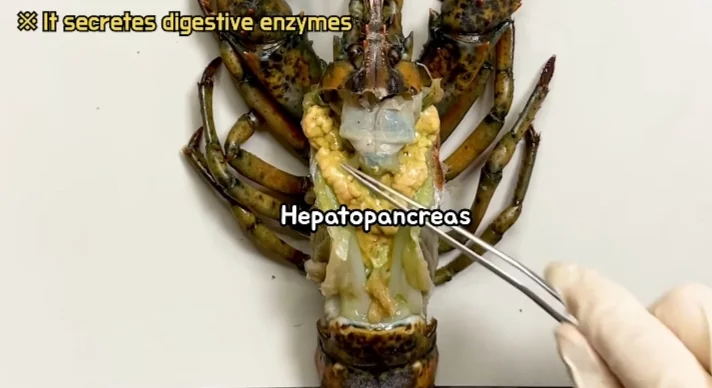
The hepatopancreas performs several key jobs:
- Absorbs nutrients: Tiny cells inside the organ take in broken-down proteins, fats, and carbohydrates so the lobster can grow and repair tissue.
- Produces digestive enzymes: Specialized cells release enzymes that help break food into even smaller molecules, similar to how human pancreatic enzymes work.
- Stores energy: It keeps fats and glycogen (a form of stored sugar). Lobsters use these energy reserves when food is low or during molting.
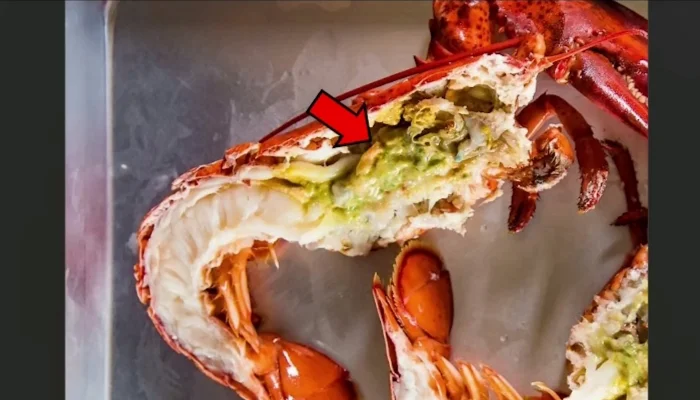
Green tomalley is the soft, greenish paste found inside the body cavity of a cooked lobster. Biologically, tomalley is the hepatopancreas, an organ that works like both the liver and pancreas in humans.
This organ:
- filters impurities from the lobster’s body
- produces digestive enzymes
- absorbs nutrients
- stores fats and energy
When the lobster is cooked, the hepatopancreas turns green and takes on a creamy texture, which many people consider a delicacy.
Some experts advise eating it in small amounts because the hepatopancreas can collect toxins from the environment, just like a liver does.
Rock Lobsters and Spiny Lobsters
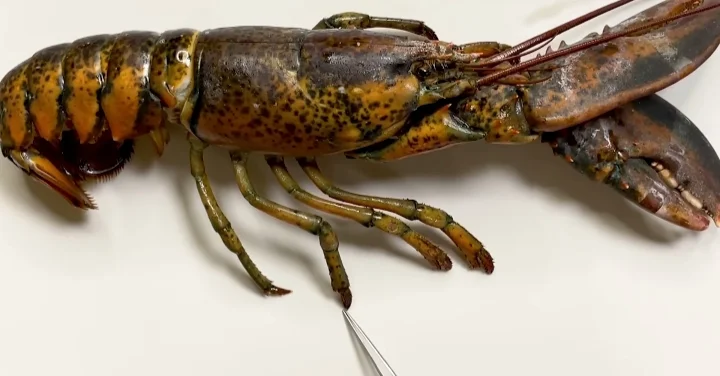
People ask if rock lobsters have teeth. Yes, they do.
Even though they lack large claws, they also have a gastric mill. Their internal plates are shaped differently but serve the same function of grinding prey.
Do Crabs Have Teeth Too?
Many crustaceans share this trait. Crabs also have a gastric mill, though the shape and number of plates vary by species. This shared feature helps these animals handle diets that include shells and hard body parts.
What Do Lobsters Eat? A Biological Summary
Lobsters are omnivores. They eat:
- bottom-dwelling animals
- algae
- decaying matter
- freshly killed prey
Their strong stomach teeth help them digest even heavily armored prey.
Where Are Lobsters Found?
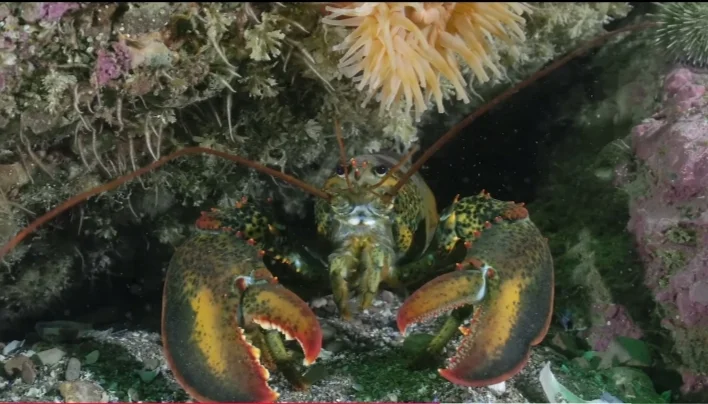
Different types of lobsters species live in different regions:
- American lobsters live in cold waters of the North Atlantic.
- Spiny and rock lobsters are common in warmer areas like the Caribbean and Indian Ocean.
- Most lobsters prefer rocky habitats where they can hide in holes and cracks.
Their hiding behavior protects them from predators such as large fish, seals, octopuses, and humans.
Fun Facts About Luscious Lobsters
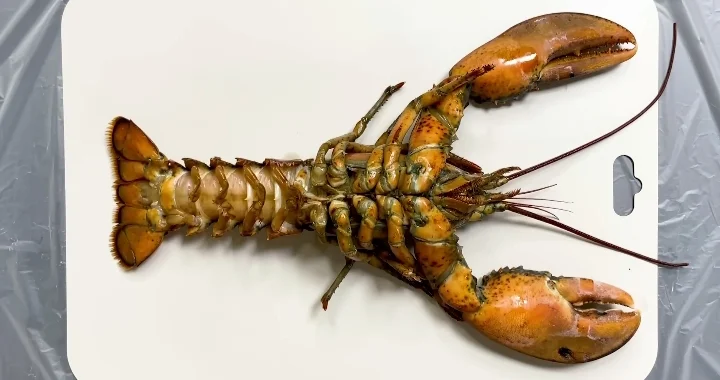
- Lobsters grow by molting, shedding their hard shell.
- Their stomach is located right behind the eyes.
- The gastric mill makes soft clicking sounds when grinding food.
- They can regrow lost legs and claws, though it takes time.
- A healthy lobster can live for many years in the wild.
Where Is a Lobster’s Anus and How Does It Work? (Biologically Explained)
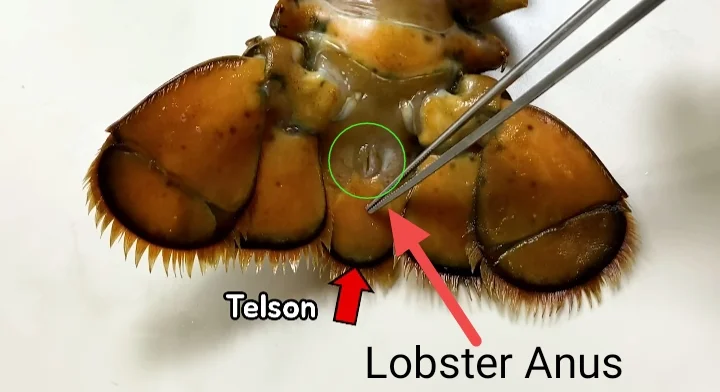
Most people never think about how a lobster poops, but understanding this part of the anatomy helps explain how efficiently a lobster digests even strange prey like jellyfish.
A lobster’s anus is located at the tip of the telson, the center part of the tail fan. This is the narrow, middle plate you see when you flip a lobster over. It is the final opening of the hindgut, where waste exits the body.
Biologically, the hindgut works like this:
- Food moves from the stomach to the hepatopancreas for enzyme digestion and nutrient absorption.
- The leftover material travels into the intestine, which runs through the tail.
- The intestine absorbs water and compacts the waste.
- Finally, the waste is released through the anus, which is protected by a small muscular valve.
This placement helps keep waste away from the gills important for a crustacean that breathes water.
FAQ Section
Where can you find a lobster’s teeth?
You can find lobster teeth inside the stomach in the gastric mill. These internal plates grind food after it is swallowed.
Where are a lobster’s teeth located?
They sit inside the stomach behind the mouth, in the head region. These plates move together to break food into small pieces.
Do lobsters chew with their stomach?
Yes. The gastric mill crushes food in the stomach. Lobsters use this internal system instead of chewing with a mouth full of teeth.
Do lobsters have teeth in their mouth?
No. They only have small structures for pushing food inward. The real chewing happens inside the stomach.
Do crabs have teeth?
Crabs also have a gastric mill. They use internal plates to grind food in a similar way.
What is the lobster theory in Friends?
It refers to a joke from the show Friends. The show suggested that lobsters mate for life. This is not true biologically. Lobsters do not form lifelong pairs.
Final Thoughts
Understanding where lobsters keep their stomach teeth helps explain why they handle tough prey so well. Their internal system shows how crustaceans adapt to survive in the ocean.