Top 10 Rarest Seashells In The World [With Photos]

The ocean’s shoreline hides some of the rarest seashells ever found, each with a story shaped by currents, habitats, and time. For collectors and curious beachcombers, discovering a rare shell can be the highlight of any coastal walk. This guide shares ten of the world’s rarest seashells with clear photos and details on where they’re found, how to identify them, and why they remain prized by shell enthusiasts.
Why Rare Seashells Fascinate Collectors
What Makes A Seashell Rare?
Not every shell you find on the sand is ordinary — some are prized gems shaped by nature and time. A seashell’s rarity often comes down to factors like how deep its original mollusk lives, how fragile its shell is, or how few exist in certain regions. Some species are naturally uncommon, while others are only found in specific currents or remote coastlines, making their discovery extra special for collectors.
👉 If you’re new to identifying shells, check out A Beginner’s Guide To Different Kinds of Seashell Identification — this quick guide helps you separate common finds from true treasures.
How Rarity Affects Value And Conservation
The rarer the shell, the higher its demand among collectors, especially for pristine, unbroken specimens. Some rare shells, like the Glory of the Sea Cone, were once considered the ultimate trophy for shell enthusiasts, commanding high prices at auctions.
But rarity comes with responsibility — over-collecting can threaten fragile marine ecosystems. That’s why many beaches and aquatic parks now have rules that limit shell harvesting or protect living mollusks. Ethical collectors always make sure they’re picking up empty, uninhabited shells and leaving live ones in their ocean home.
The World’s Top 10 Rarest Seashells You Might Find
1. Glory of the Sea Cone (Conus gloriamaris)

Known by its Latin name, the Conus gloriamaris — or Glory of the Sea Cone — is one of the world’s most legendary seashells. For decades, it held a reputation as the rarest and most valuable cone shell, inspiring collectors to pay thousands for a single flawless specimen. Its name literally means “Glory of the Sea” in Latin, fitting for its stunning elegance and elusive nature.
Once crowned the world’s most valuable seashell, the Glory of the Sea Cone has an almost mythical status among collectors. Its slim, elongated shape and delicate pattern of fine lines make it a true gem for conchologists. Finding one is rare, and owning one is a highlight for any serious shell collection.
How Rare Is It?
Historically, only a handful of Conus gloriamaris shells were ever found, making them a coveted treasure for serious collectors. While modern divers occasionally locate them in deep Indo-Pacific reefs, they remain a prized and protected find. Their rarity, unique pattern, and long history of fascination keep them high on any shell collector’s wish list.

Habitat
The Glory of the Sea Cone lives in the warm tropical waters of the Indo-Pacific region, especially near coral reefs off the coasts of the Philippines, Papua New Guinea, and the Solomon Islands. These snails dwell in deep waters, making them difficult to find on ordinary beach walks.
Unique Features
This shell’s smooth surface is etched with intricate, wavy lines that look like natural calligraphy. Its colors range from creamy white to warm golden brown. Historically, its rarity made it so prized that early specimens were displayed in royal cabinets and fetched thousands of dollars at auctions.

Safety Note (Cone snails can be venomous)
Important: If you ever find a live cone snail, never pick it up. Many cone snails, including the Conus gloriamaris, have a venomous harpoon-like tooth that can deliver a painful (and in some cases, dangerous) sting. Always handle empty shells only, and admire live specimens safely from a distance.
2. Junonia Shell (Scaphella junonia)

The Junonia shell is one of the most coveted beach finds along the Gulf of Mexico. Its creamy white surface, dotted with brown spots in a perfect spiral pattern, makes it instantly recognizable to seasoned collectors. Because the living mollusk that creates it lives in deeper offshore waters, finding one washed ashore is a special moment for any beachcomber.
👉 Already love unique shells? Don’t miss Top 8 Starfish Species Identification in Florida — many shell hunters spot starfish while searching for Junonias, too!
Where It’s Found
You’re most likely to find a Junonia washed up on beaches in Florida, especially around Sanibel Island, which is world-famous for shelling. Early mornings after strong storms or low tides offer the best chance to spot one glinting in the sand.

How To Identify A Junonia
Look for its distinctive spotted pattern — no two shells have the same arrangement of dots. A true Junonia is robust yet smooth, with a tall spire and tightly coiled whorls. Its unique pattern makes it stand out from common shells like the lettered olive or cone shells.

3. Lion’s Paw Scallop (Nodipecten nodosus)

The Lion’s Paw Scallop is a dream find for many beachcombers — large, sturdy, and strikingly colorful. Its name comes from its ribbed, fan-like shell that resembles a lion’s paw in shape and strength. Collectors love it for its vibrant shades of deep orange, red, or purple, which stand out beautifully in any shell display.
Best Places To Find
Lion’s Paw Scallops are mostly found along the Atlantic coast, especially from North Carolina down through Florida and into the Gulf of Mexico and the Caribbean. They usually live in deeper offshore waters attached to rocks or coral. Strong storms or dredging sometimes wash empty shells to beaches where lucky collectors can find them.
Tips For Collectors

These scallops are prized for their size and color, but perfect specimens can be fragile if weathered by waves. When hunting for Lion’s Paw shells, check shell beds after storms or explore tide lines during low tide. Respect local rules: In many areas, it’s illegal to take live scallops, so always look for empty shells.
4. Scotch Bonnet (Semicassis granulata)

The Scotch Bonnet is a small but special seashell with a distinctive checkered pattern of brown or yellowish spots on a creamy white background. Its rounded, bonnet-like shape inspired its charming name, and its significance goes beyond beauty. The Scotch Bonnet is famously recognized as the state shell of North Carolina, adding to its appeal for collectors and local beach lovers alike.
State Shell of North Carolina
In 1965, North Carolina designated the Scotch Bonnet as its official state shell to celebrate the state’s rich coastal heritage. These shells are often found along the Outer Banks and other barrier islands. Locals and tourists alike prize the Scotch Bonnet for its symbolic tie to the region and its delicate, beautiful appearance.
Lookalike Shells
The Scotch Bonnet can be confused with juvenile helmet shells or certain cowries, especially when weathered. Its unique grid-like spots and gently rounded spire help distinguish it. When in doubt, use a good field guide or compare it with trusted photos to ensure you’ve found a true Scotch Bonnet.
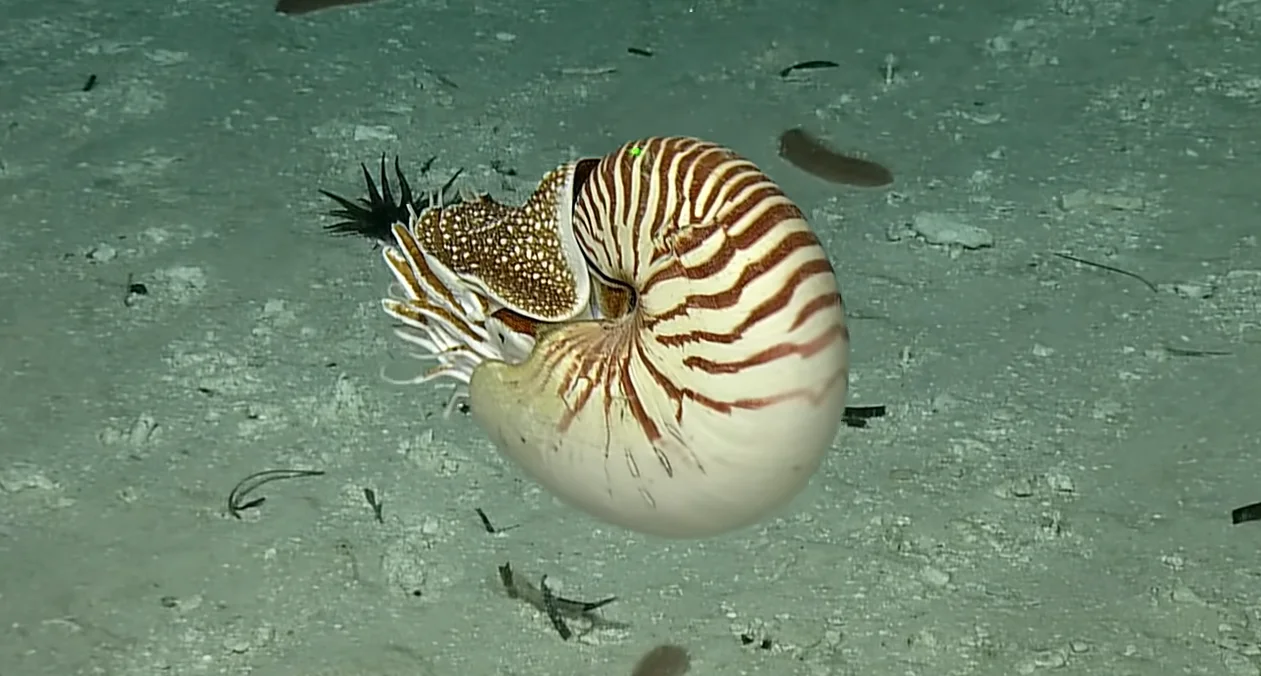
5. Nautilus Shell (Nautilus pompilius)

Few shells capture the imagination like the Nautilus Shell — a perfectly coiled, pearly chambered shell that’s instantly recognizable. Often called a “living fossil,” the Nautilus has remained largely unchanged for millions of years, making it a symbol of ancient ocean life and natural design.
Living Fossil

Nautiluses belong to an ancient family of cephalopods that have roamed the world’s oceans for over 500 million years. Their beautiful spiral shells are divided into inner chambers, which the Nautilus uses to control buoyancy as it drifts through deep ocean waters. Each shell’s smooth, mother-of-pearl interior and precise spiral have made it a favorite for collectors and artists alike.
Conservation Status
Sadly, the Nautilus faces threats from overharvesting for its shell and habitat loss. Due to growing demand, wild Nautilus populations have declined sharply in some regions. International protections now regulate the trade of Nautilus shells to help conserve these incredible creatures. If you find one for sale, always check that it was ethically sourced — or better yet, admire them alive in the ocean or at reputable aquariums.

6. Wentletrap Shell – Epitonium spp. (multiple species, commonly Epitonium scalare)

The Wentletrap Shell is a delicate, spiral seashell known for its elegant, ribbed whorls that curl like a staircase — fitting, since its name comes from the Dutch word wenteltrap, meaning “spiral staircase.” Though small, this shell is a prized find among collectors because of its fragile beauty and complex design.
Fragile Beauty
Wentletraps are often pearly white or pale lavender, with sharp, well-defined ribs running along their spiral. They’re usually found in shallow tropical and subtropical waters worldwide, hiding among coral and rocky areas. Their fragile form makes unbroken specimens a true beachcomber’s treasure.
Common Mistaken IDs
Because of their shape, Wentletrap shells are sometimes confused with certain auger shells or small turret snails. The best way to tell them apart is by looking at the thick, sculpted ribs that make a Wentletrap unique. Always handle these shells gently — they chip easily but are stunning additions to any shell collection.
7. Sundial Shell (Architectonica perspectiva)

The Sundial Shell is a mesmerizing marine gem famous for its flat, perfectly coiled spiral that resembles an ancient sun dial. Its striking symmetry and contrasting bands of cream, brown, or reddish hues make it a beautiful find for collectors who appreciate detailed natural designs.
Spiral Patterns
What makes the Sundial Shell stand out is its low, disc-like shape and precise spiral grooves. Each whorl displays a patterned band that gives the shell a hypnotic look when viewed from above. This shell’s unique structure has inspired artists and designers for centuries.
Where To Spot Them
Sundial Shells are found in shallow tropical waters, especially around coral reefs and sandy bottoms in the Indo-Pacific. They often hide under rocks or coral rubble, so a careful eye and gentle hands are needed to find one intact. Many shell hunters discover them while snorkeling in reef areas rather than on the open beach.

8. Imperial Volute (Aulica imperialis)

The Imperial Volute is one of the most majestic and eye-catching seashells in the world. Known for its large size and striking spiral ridges, this shell often features a creamy base color with dramatic brown or reddish zigzag bands, making each one a natural work of art.
Where They’re Found
Imperial Volutes are native to the warm waters of the Philippines, where they live on sandy or muddy sea floors at moderate depths. Because of their deep habitat, these shells rarely wash ashore — most are found by divers exploring tropical reef slopes.
Collection Rules
Due to their beauty and limited range, Imperial Volutes are heavily collected and, in some areas, protected. Always check local regulations before collecting one. Many responsible shell collectors now only buy older, ethically sourced specimens to help conserve wild populations.
9. Harp Shell (Harpa major or other Harpa species)

The Harp Shell is a true masterpiece of nature, admired for its beautifully ribbed, harp-like shape that inspired its name. Its glossy surface, delicate ridges, and warm shades of cream, tan, or soft pink make it a favorite among collectors who appreciate both beauty and unusual forms.
Musical Shape
This shell’s distinctive appearance comes from its pronounced, parallel ribs that resemble the strings of a harp. Unlike smooth shells, the Harp’s deep grooves and graceful curves give it an elegant, sculptural look that stands out in any collection.
Interesting Facts
Harp Shells live mostly in sandy or muddy areas of warm tropical waters, often burying themselves during the day and emerging at night to feed. Ancient cultures prized them for decoration and even as musical inspiration. Today, finding a Harp Shell in perfect condition is a highlight for any shell hunter due to its fragile ridges.

10. Mitre Shell (Episcopal Mitre)

The Episcopal Mitre, also known simply as the Mitre Shell, is named for its resemblance to a bishop’s ceremonial hat. Its elegant, elongated shape and bold, reddish-brown or orange bands make it one of the most striking and desirable shells for advanced collectors.
Elegant Design
This shell is prized for its glossy surface and rich, banded colors that spiral neatly around its long spire. Each shell is slightly unique — patterns can vary from finely dotted lines to thick, flame-like stripes that wrap around its whorls.
Where It’s Found
Mitre mitra lives in warm Indo-Pacific waters, especially around coral reefs and sandy seabeds. Once relatively common, pristine specimens have become increasingly rare due to overcollecting and reef degradation. Divers usually find them at moderate depths, often hiding under coral ledges or sandy slopes.
Why It’s Rare
Because of its popularity with collectors and the challenges of its reef habitat, the Episcopal Mitre is now harder to find than ever — making an unblemished shell a true trophy for dedicated shell hunters.

Tips For Finding Rare Seashells
Hunting for rare seashells can feel like a real-life treasure hunt — part luck, part timing, and part knowing exactly where (and when) to look. Whether you’re hoping to find unique shells on your local beach or planning a special shelling trip, these practical tips can help you spot those hard-to-find shells while respecting nature.
Best Beaches To Hunt For Rarest SeaShells
Not all beaches are equal when it comes to finding rare beach shells. Some of the world’s top spots for unique shells include the beaches of Sanibel Island in Florida (famously called the Seashell Capital of the World), the Outer Banks in North Carolina for Scotch Bonnets, and the remote sandy shores of the Philippines for Imperial Volutes and Mitres. Storm-tossed coasts, barrier islands, and beaches near coral reefs are often treasure troves for unusual finds.
Best Time Of Year For Rare Finds
Timing your hunt can be just as important as the beach itself. Many collectors swear by going after strong storms or hurricanes — powerful waves can uncover buried shells and wash rare ones ashore. The best shelling is often during winter and early spring when tides are lower and crowds are thinner. Arrive early at low tide for the best chance to find undisturbed shells before others spot them.
Ethical Collecting Tips
Responsible collecting keeps these beautiful creatures safe for future generations. Always check local laws , many areas ban taking live shells or certain endangered species. Focus on empty shells and avoid over-collecting from a single spot. If you’re ever unsure, leave it behind — sometimes the best souvenir is just the memory and a photo.
For more tips, visit these forums for seashell lovers.
FAQs About Rare Seashells
Final Thoughts
From the elusive Junonia to the dazzling Episcopal Mitre, the world’s rare seashells remind us just how much mystery and beauty our oceans still hold. For many collectors, finding one of these unique shells is more than just a hobby — it’s a chance to connect with nature and discover treasures shaped by time and tide.
If you’re inspired to start your own hunt for rare beach shells, remember to collect responsibly and keep learning. Knowing how to spot lookalikes, handle delicate finds, and protect fragile habitats makes every shelling trip more rewarding.