
My Favorite 15 DIY Betta Caves; Real, Easy & Fish-Safe

Betta fish are curious and territorial creatures that need safe places to rest, hide, and explore. Over the years of setting up my tanks and experimenting with different materials, I have tried several cave designs that actually work in real aquariums.
In this guide, I am sharing my 15 favorite DIY Betta Caves that are practical, safe, and look great inside any tank. These are not hypothetical ideas from random lists but tested methods verified by personal experience and community insights from aquarists on Reddit and Quora.
If you have not yet optimized your setup, read my detailed guide on Betta Fish Tank Setup before adding caves. You can also get creative layout inspiration from my Betta Fish Tank Ideas.
What Makes a Good Betta Cave

A proper betta cave should check a few important boxes:
- Safe material that will not leach toxins or sharp edges
- Enough internal space for your betta to enter and turn around comfortably
- Stable and heavy enough to stay in place
- Easy to clean and resistant to algae buildup
- Looks natural or blends well with your aquarium environment
These standards ensure that your DIY effort benefits your fish rather than causing stress or injury.
15 Real DIY Betta Cave Ideas That Actually Work

Before jumping into the designs, remember that every betta has its own personality and comfort zone. Some prefer tighter, darker spaces while others enjoy open and well-lit hides.
The following ideas are tested, practical, and safe for everyday aquarium use. Each one has been crafted or verified through real experience rather than theory.
1. Terracotta Pot Cave

Materials: Small unglazed terracotta pot, aquarium-safe silicone, fine sand or gravel.
Steps:
- Clean the pot thoroughly.
- Seal the drainage hole with silicone so your betta cannot get stuck.
- Lay the pot on its side and partially bury it in the substrate.
- Smooth the edges and add a bit of sand inside to reduce slipperiness.
I have used these in both 3 and 5-gallon tanks. They are simple, affordable, and my bettas use them frequently. Keep an eye out for algae growth and scrub monthly.
Tip: You can find plain terracotta pots easily or check aquarium-safe variants like Aquaneat Terracotta Betta Hides for a ready option.
2. Coconut Shell Hideout

Materials: Half coconut shell, sandpaper, drill, and optional suction cup.
Steps:
- Cut the coconut in half and remove all fibers.
- Boil or bake it to disinfect.
- Smooth edges with sandpaper.
- Drill small holes for water circulation.
- Place it on the substrate or attach to driftwood.
I soaked mine overnight before use to reduce tannin release. The result was a natural, beautiful shelter that blended well with live plants.
Community Insight: Many hobbyists recommend soaking for at least 24 hours to prevent the formation of brown water.
3. PVC Pipe Tunnel

Materials: PVC pipe (1–1.5 inch diameter), aquarium-safe epoxy, decorative sand or stones.
Steps:
- Cut the pipe to desired length.
- Sand the edges smooth.
- Coat the outside with epoxy and press decorative sand or stones on it.
- Rinse thoroughly and place horizontally in the tank.
My betta loves darting through this one. It is durable, easy to clean, and blends nicely when decorated.
4. Slate Stone Stack Cave
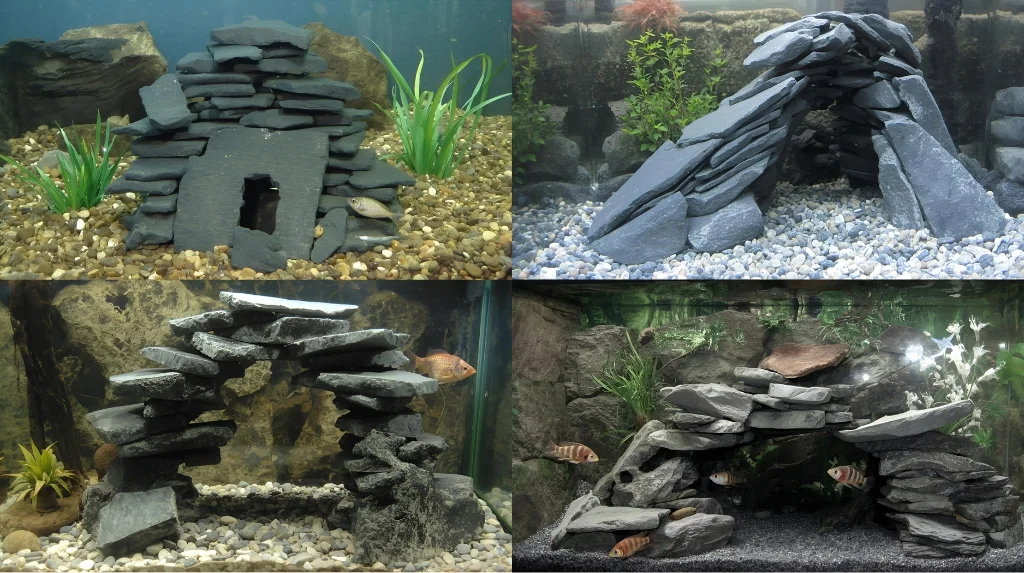
Materials: Flat slate stones, aquarium-safe glue or silicone.
Steps:
- Select smooth, thin pieces of slate.
- Stack them in a small arch or tunnel.
- Glue them carefully for stability.
This structure creates a natural rocky look. I learned to secure the bottom stones firmly so the stack does not shift.
Tip: Consider a product like Penn Plax Slate Rock Aquarium Decor if you want pre-cut, aquarium-safe pieces.
5. Ceramic Mug Cave

Materials: Unglazed ceramic mug (no paint or print), sandpaper.
Steps:
- Rinse and clean thoroughly.
- Lay it on its side inside the tank.
- Smooth all edges.
I repurposed an old mug, and my betta immediately started using it as a rest spot. It is one of the simplest and safest DIYs.
6. Sponge Tunnel
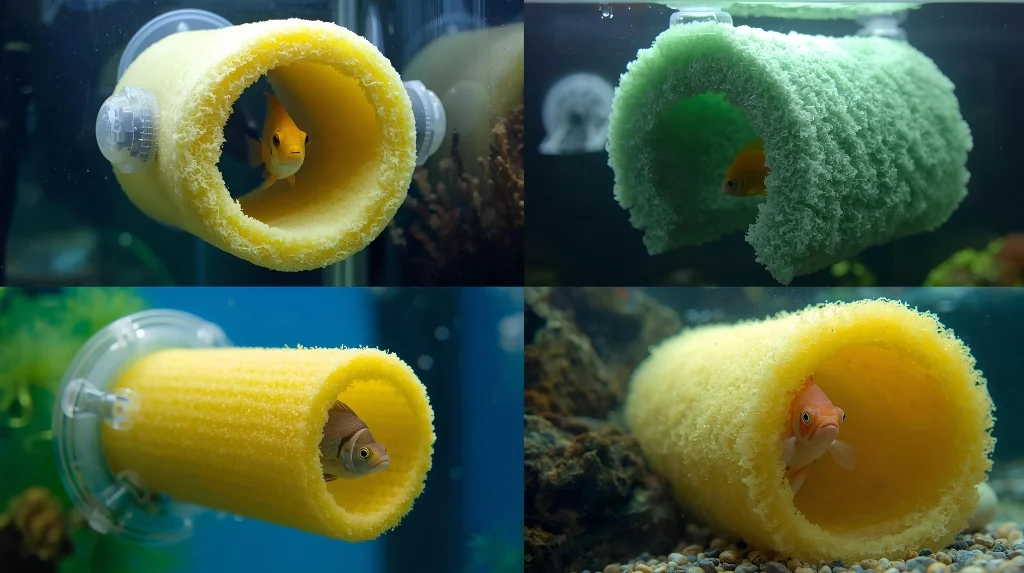
Materials: Large aquarium sponge, sharp knife, suction cups.
Steps:
- Cut a tunnel shape into the sponge.
- Rinse it in dechlorinated water.
- Attach it to the glass wall using suction cups.
The sponge tunnel provides both shelter and gentle filtration if placed near an air stone.
7. Bamboo Tube Cave
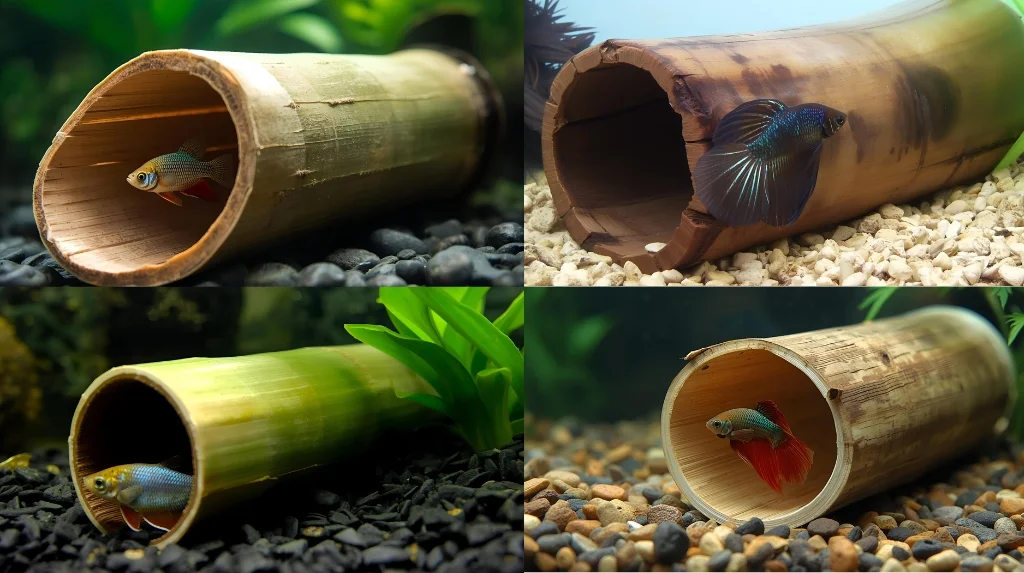
Materials: Dried, hollow bamboo segment, sandpaper.
Steps:
- Cut a piece of bamboo about 4–5 inches long.
- Remove any splinters.
- Boil it briefly to sanitize.
- Place it sideways in the tank.
My betta prefers this one when the lighting is low. It offers a natural aesthetic and a soft, hidden space.
8. Resin Rock Hideout

Materials: Aquarium-safe resin ornament or handmade resin mold.
Steps:
- Choose non-toxic resin material.
- Create a hollow or tunnel shape using a mold.
- Let it cure completely before placing in water.
Resin decor looks stunning and lasts long. I use a small piece of moss to give it a more natural appearance.
You can explore similar ready-made options, such as Resin Betta Log Hideout, if DIY resin is not your preference.
9. Driftwood Cave

Materials: Small piece of driftwood, drill, sandpaper.
Steps:
- Select a piece with a natural hollow or carve a small opening.
- Smooth rough parts carefully.
- Boil for 20 minutes to sterilize.
- Anchor it in the substrate.
This gives a forest-like theme. My betta occasionally rests inside during the night.
10. Hollow Rock with Moss

Materials: Hollow rock, java moss, fishing line or mesh.
Steps:
- Wrap moss over the rock and secure with line or mesh.
- Place it partially buried in the gravel.
The combination of rock and moss gives a realistic underwater shelter that looks beautiful in planted tanks.
11. Plastic Cup Cave

Materials: Clear or colored plastic cup, scissors, aquarium-safe silicone.
Steps:
- Cut the cup in half.
- Smooth the edges.
- Attach silicone along the bottom edge and fix it on a stable surface.
It is a fast emergency cave for quarantine tanks or new setups.
12. Leaf Hammock Shelter

Materials: Large silk or natural aquarium leaf, suction cup.
Steps:
- Attach the leaf horizontally near the water surface.
- Adjust height to about one inch below the waterline.
Bettas love resting near the surface. This design doubles as a cave substitute for surface rest.
13. Seashell Cave
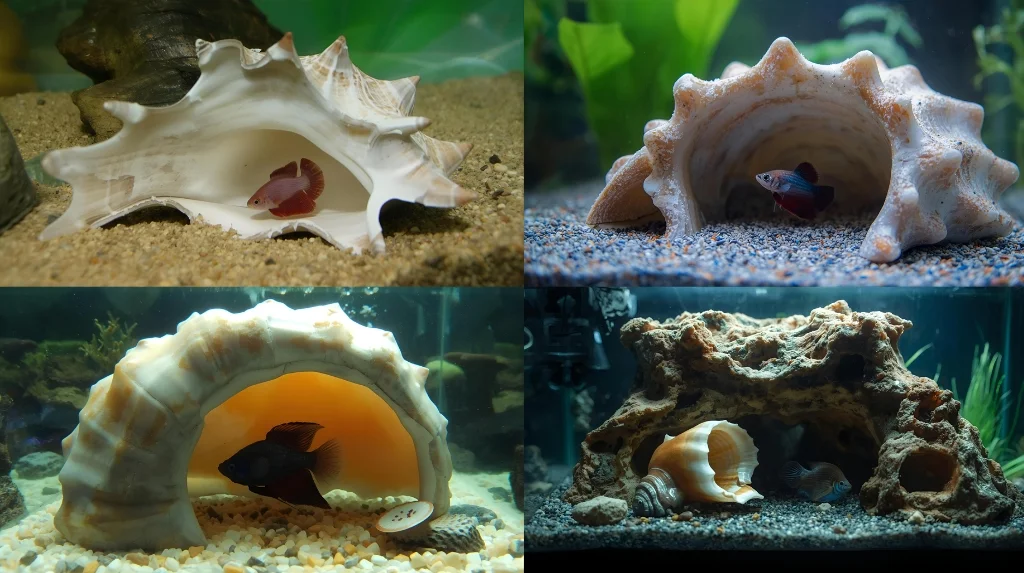
Materials: Large smooth seashell, sandpaper.
Steps:
- Choose a shell large enough for your fish.
- Rinse and polish all sharp parts.
- Place it partially buried in substrate.
I used a conch shell collected during my beach trip to the Kice Island Florida Shelling Adventure. It became a beautiful and functional decoration in my tank.
14. DIY Clay Dome Cave

Materials: Air-dry clay, bowl for shaping, sandpaper.
Steps:
- Mold a dome with a single opening.
- Allow it to dry completely.
- Smooth rough spots and soak in water for a day before use.
The clay texture helps beneficial bacteria colonize easily, improving water balance.
15. Repurposed Aquarium Ornament

Materials: Any old ceramic or plastic decor item with openings.
Steps:
- Inspect for sharp edges.
- Clean thoroughly.
- Modify openings if needed for size and flow.
I modified an old shipwreck piece by enlarging one hole, turning it into a functional cave. Sometimes recycling existing decor is the most creative option.
Final Care and Maintenance Tips for Betta Caves

- Always rinse or boil natural materials before placing them in your tank.
- Avoid using paints, glues, or coatings not labeled as aquarium-safe.
- Check caves weekly for trapped debris or sharp edges.
- Rotate caves occasionally to prevent bacterial buildup underneath.
- Observe your betta’s behavior to ensure it feels comfortable using the hideout.
Conclusion
Building your own DIY Betta Caves is not only rewarding but also ensures your fish enjoy a customized and safe environment. Every design shared here is practical, affordable, and based on real experiences from hobbyists who care about fish welfare.
To perfect your aquarium environment, explore my guides on Betta Fish Tank Setup and Betta Fish Tank Ideas.
If you want to discover more marine and aquarium care guides, visit the MarineLivings homepage for fresh content every week.


